A complete text version of the narration. Play it in full, or choose "Start in 1901" to begin when Moss Point became a city.
Alternate opening (Start in 1901)
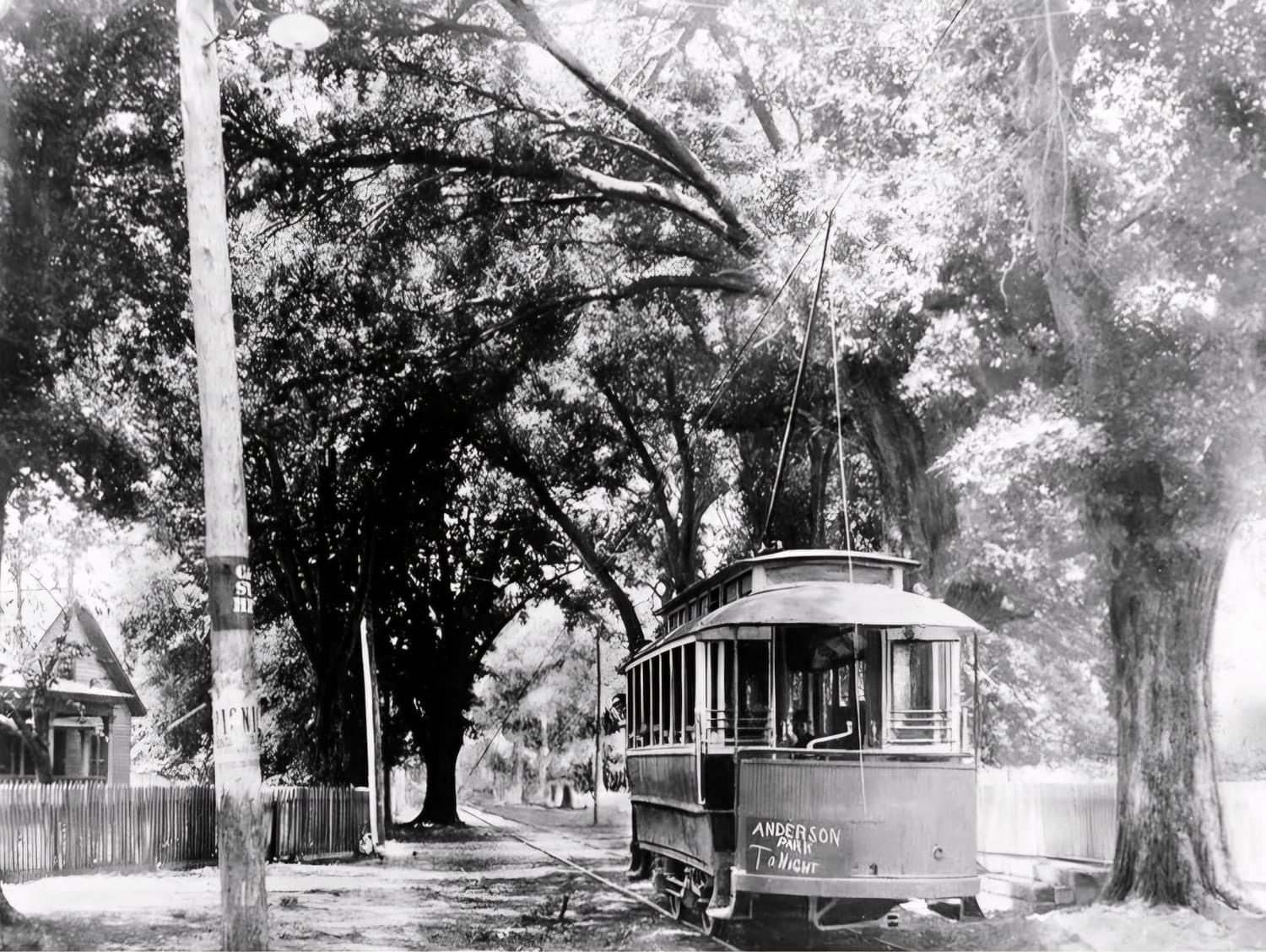
Welcome to Moss Point, Mississippi, the town the Gulf Coast has always called the River City. This is the shorter way into the story, and it picks up at the moment Moss Point truly became a city. First, though, a quick word on how it got here. For most of the eighteen hundreds, this was a mill town down where the two rivers meet. Its sawmills made it the largest pine lumber export center in the whole country, with a waterfront crowded by tall ships bound for Europe and South America. By the turn of the century, the little mill town had outgrown its britches.
1. The Story of Moss Point
Welcome to Moss Point, Mississippi, the town folks along the Gulf Coast have always called the River City. For the next little while, just sit back and listen. The page is going to carry you down the timeline all on its own, from the moss draped oaks that gave this place its name, to a city that's outlasted fire, flood, and storm, and never once stayed down. If you want to pause, skip ahead, or step out of the tour, the controls are waiting at the bottom of your screen. So let's start where this story has always started, down where the two rivers meet.
2. The first people
Long before the mills, before the town had a name, this land where the rivers meet belonged to other people. The Mohocti lived here, with their kin the Pascagoula and the Biloxi, in small villages along the water, and when the first French boats came up the coast in 1699, they found these families already home. And they were only the newest. For thousands of years before them, people had lived and fished on these same waters, leaving their shell mounds along the banks. The Pascagoula live on in an old story, of a whole people who are said to have walked singing into the river rather than be taken. Believe the legend or not, on a still night the water still seems to hum. This is where Moss Point begins. Not with us. With them.
3. Named for the oaks
Long before there was a city here, there were the oaks. Cattle herders moving their animals along the rivers knew this bend as Mossey Pen Point, a shady resting spot where they could pen their herds under live oaks hung heavy with Spanish moss. And over the years, the name wore down the way river stones do. Mossey Pen Point became Mossy Point, and Mossy Point, at last, became Moss Point. Those same oaks are still standing today, out where the two rivers meet, on land that was first home to the Mohocti people. And from that day to this one, it's the water that has carried this city's story.
4. The first mills
It opens with sawdust. Half a century before the great lumber boom, sawdust was already drifting through the air here. Back in the 1830s, a surveyor named Thomas C. Rhodes, the same man Rhodes Bayou is named for, opened one of the first sawmills on these banks. The Beardslee and Bradford mill followed in 1836, and in 1853 Walter Denny bought a mill here and built it into one of the leading operations on the river. Now, local histories tell of one early miller, William Griffin, who took his machinery apart during the Civil War and buried it deep in the river swamp, and when the war ended, he dug it back up, and had Moss Point sawing lumber again almost before the smoke had cleared.
5. Steeples over the mill town
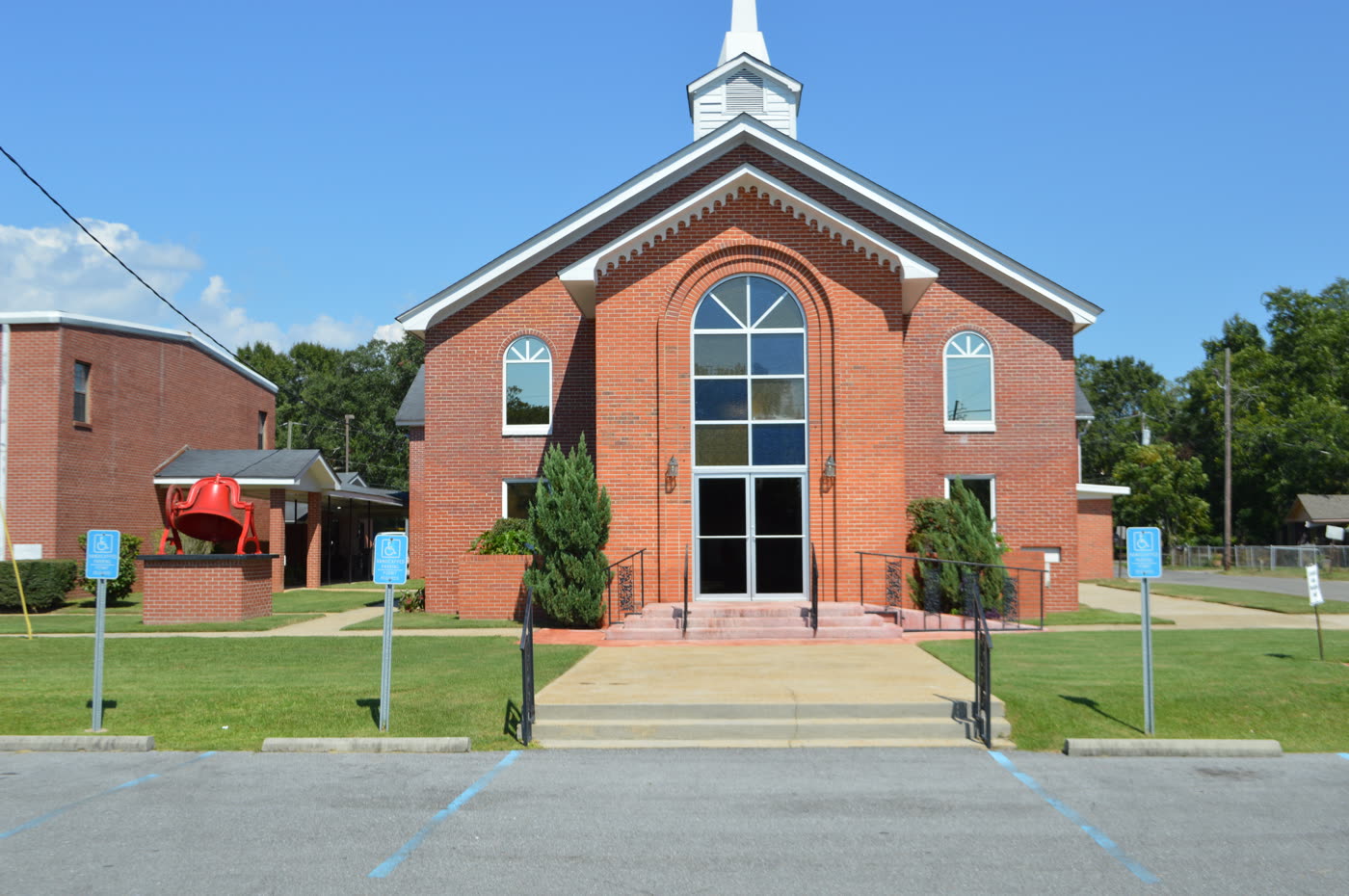
Almost as soon as there were mills, there were churches. Moss Point's Methodists organized in 1852, in the decade before the Civil War, and in 1882 they raised a frame church for the growing town. The Presbyterians followed on February twenty second, 1874, fourteen charter members, among them the McInnis and McLeod families, and the sanctuary they began building in 1878 still stands on Dantzler Street today, one of the oldest church buildings in Moss Point. Then in 1914, the Methodists built a landmark of their own, the brick sanctuary that today faces Moss Point High School across Weems Street. Designed by the New Orleans architect William Drago, its cornerstone laid on August twenty second, 1914, it was raised in memory of Sara Griffin Dantzler of the lumber family whose name it still carries. Today it is Dantzler Memorial.
6. Elder Cemetery
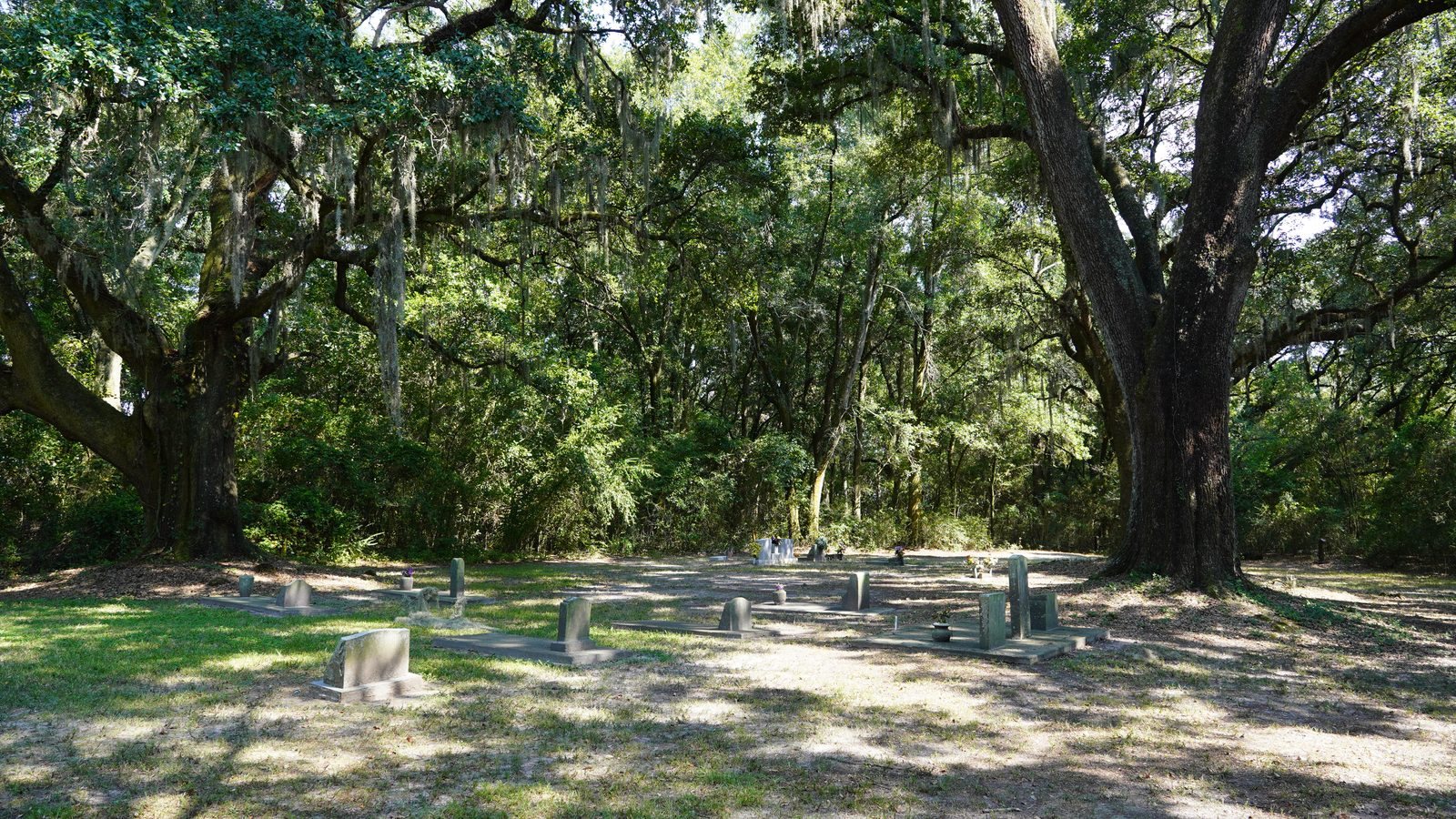
The war left quieter marks here too. Beneath a stand of oaks on the edge of town lies Elder Cemetery, a burial ground that goes back to the 1860s. A historical marker there remembers the Elder family, the old Elder Ferry, and the earliest families ever laid to rest in this place. It keeps that memory the way this town keeps most things, in the quiet shade of the oaks. Across town on Magnolia Street lies the other old burying ground. Saint Paul Cemetery grew up around the Community Church, and its oldest tomb is dated 1868. Solomon Gregory, a man born before Emancipation, set the cemetery in order in 1898 and rests there today, among neighbors who were born in slavery and died free. And among its veterans lies Isabel Griffin, called Sister, who served in the Six Triple Eight, the all Black Women’s Army battalion of World War Two whose service was honored with the Congressional Gold Medal.
7. The man who made everything
Not every arrival came to rest. In 1869, a man named Adam Blumer came to town and set about building nearly everything a mill town could need, a foundry with Lorin Hand, a tannery, a shoe factory, a grist mill, even a brickyard, and he found time to serve as postmaster besides. Local histories add a glass works to that list, and they tell of a fire in 1887 that melted it down into a heap of translucent blue glass. For years afterward, folks chipped off pieces for their gardens, and that blue glass still turns up along the old fence lines today. The Blumer Building on Main Street still carries his name, right down by the Riverwalk.
8. The churches that carried the town
Faith built here early too, and it built to last. In the years after the Civil War, Moss Point's Black families worshiped together at Saint Paul Methodist, a one room church standing since around 1849 on ground that is now Saint Paul Cemetery, so central to life here that folks simply called it the Community Church. Out of that congregation, on September twentieth, 1874, eight members, five women and three men, organized the First Baptist Church. It grew right along with the town, raising a sanctuary on Main Street in 1902 and a brick one in 1956, its rolls carrying more than eight hundred names by midcentury. And these churches did far more than hold services. Alongside congregations like Second Baptist, they raised up schools, choirs, and leaders. And when this city's hardest chapters came, it would be these same churches, time and again, that opened their doors first. That story was still to come.
9. Built on longleaf pine
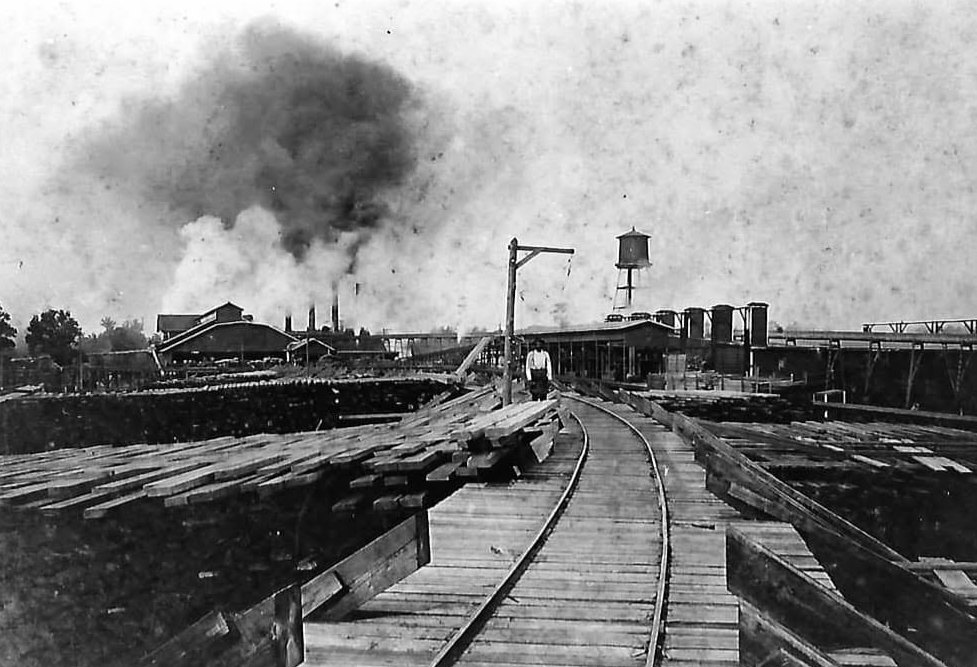
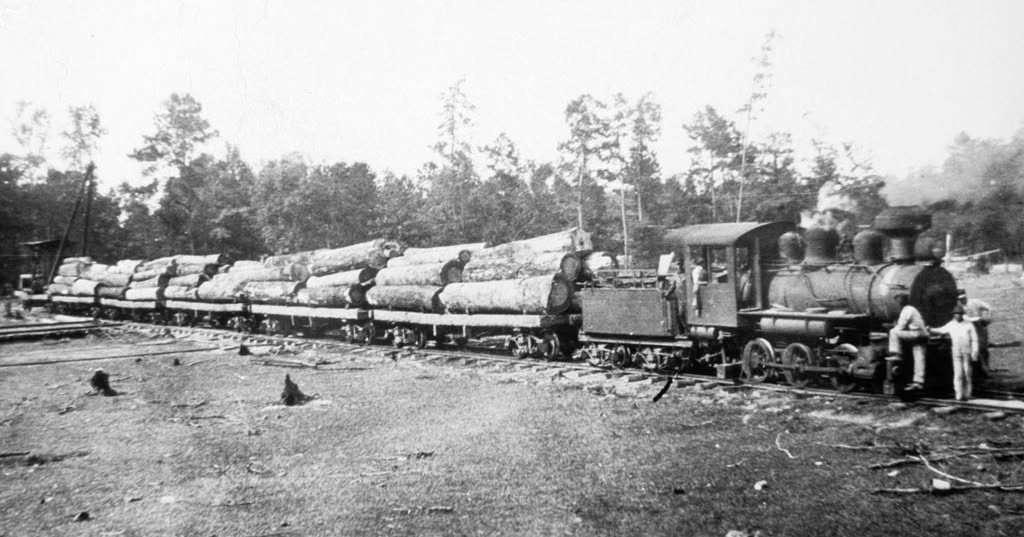
The young town those steeples rose over did not stay little for long. It was standing on the edge of a boom. For decades, Moss Point was the largest pine lumber export center in the whole country, better known in the ports of Europe and South America than it was in most of America itself. The Dantzler Lumber Company ran its sawmill on the Escatawpa from 1885 and grew into the largest exporter in Mississippi. At the peak of it all, there were as many as nine sawmills running inside the city, and twelve along a single mile of river.
10. A harbor full of sail
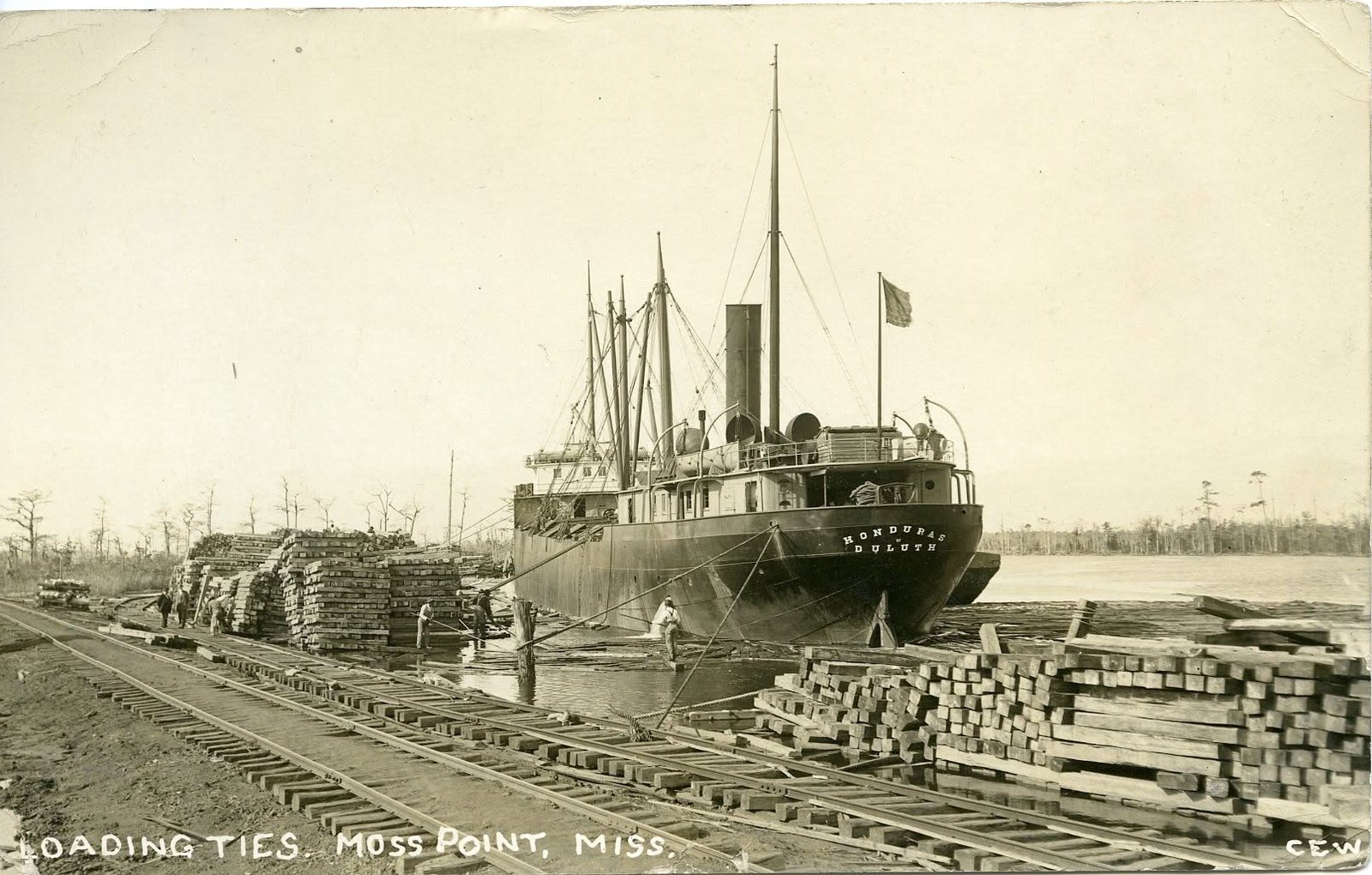
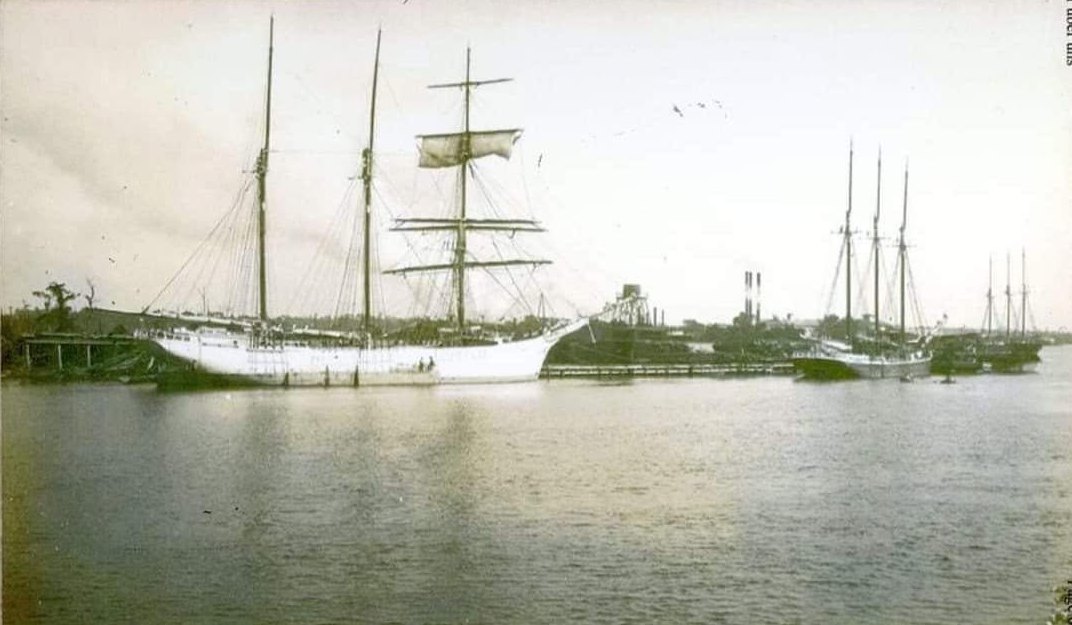
Of course, all that lumber had to reach the world somehow, and before the highways, the rivers were the highway. The Moss Point waterfront stayed crowded with schooners and steamers, their masts standing thick along the banks, waiting to carry the city's lumber across the ocean. The whole economy floated on this water.
11. The boy who won the Derby
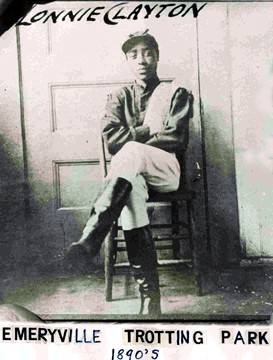
The river raised some remarkable people too. By several accounts, a jockey named Lonnie Clayton was born right here in 1876, back when the town still went by Mossy Point. In 1892, at just fifteen years old, he rode a colt named Azra to victory in the Kentucky Derby, and to this day, he's remembered as the youngest jockey ever to win it.
12. The street takes shape
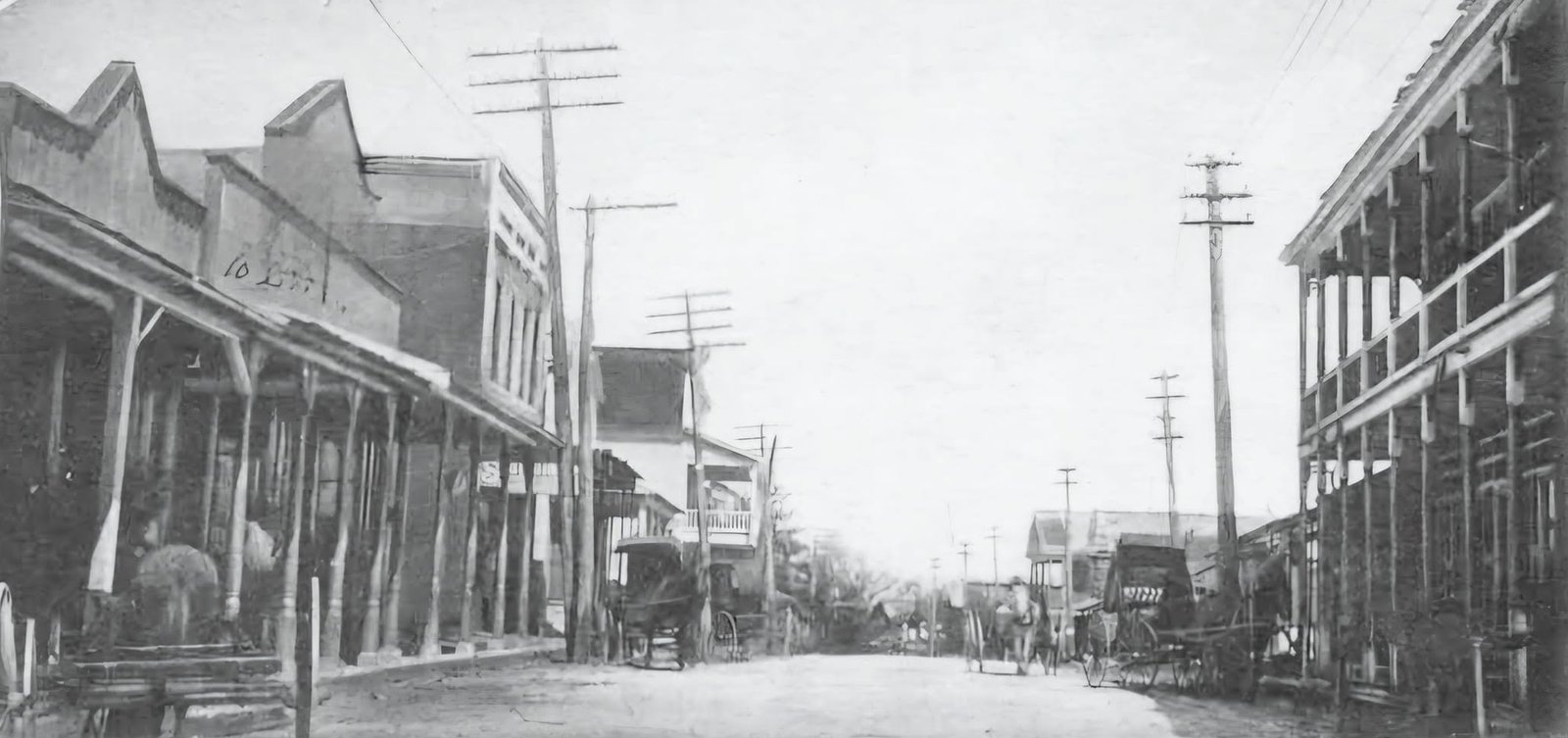
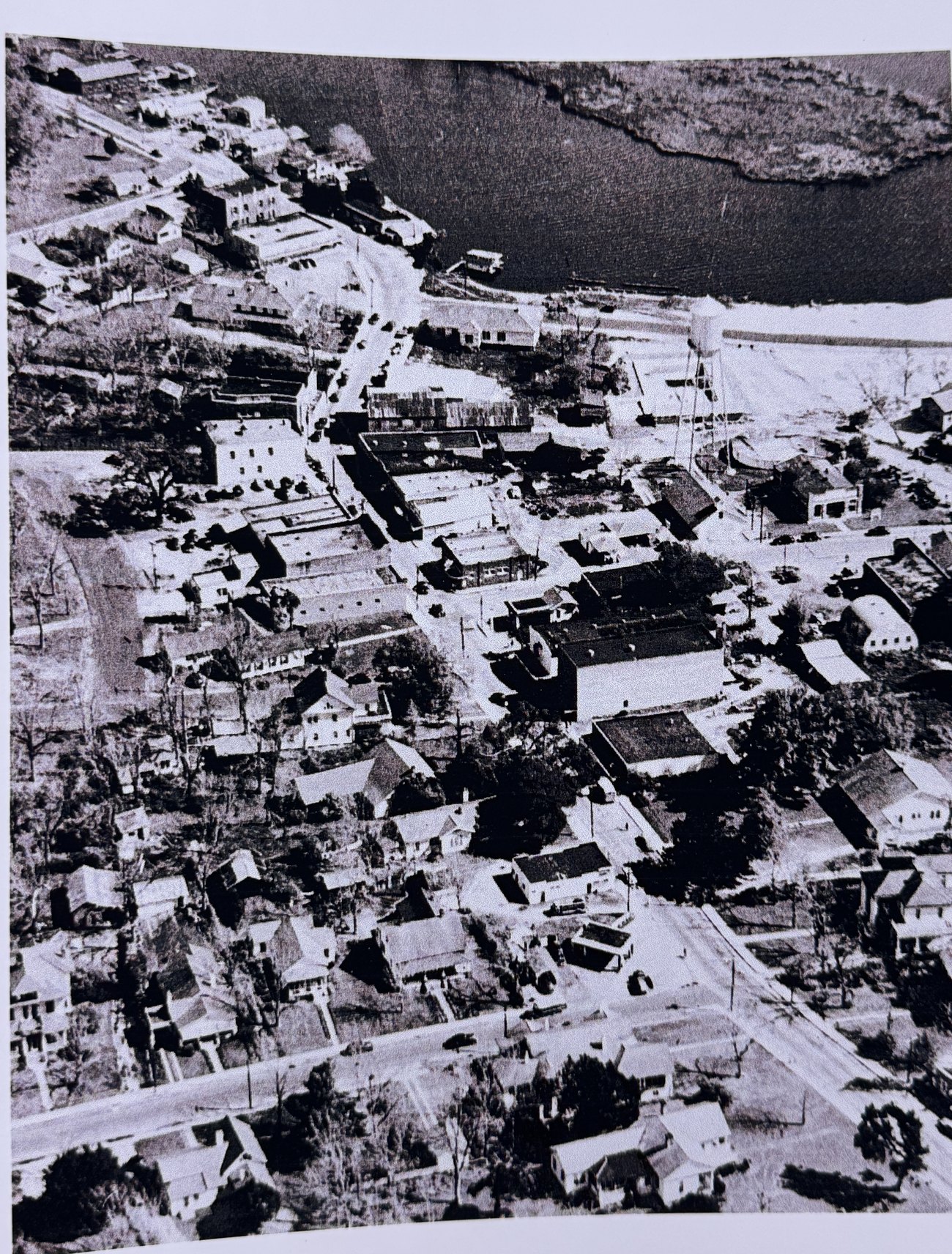
While the river did the heavy lifting, the town itself was just taking shape. In the 1890s, Main Street was still a wide dirt road, lined with wood front stores and board sidewalks, with horses and wagons working the ruts in between. But it was already the center of things, years before brick blocks and a bank would give the district its weight.
13. Main Street rises
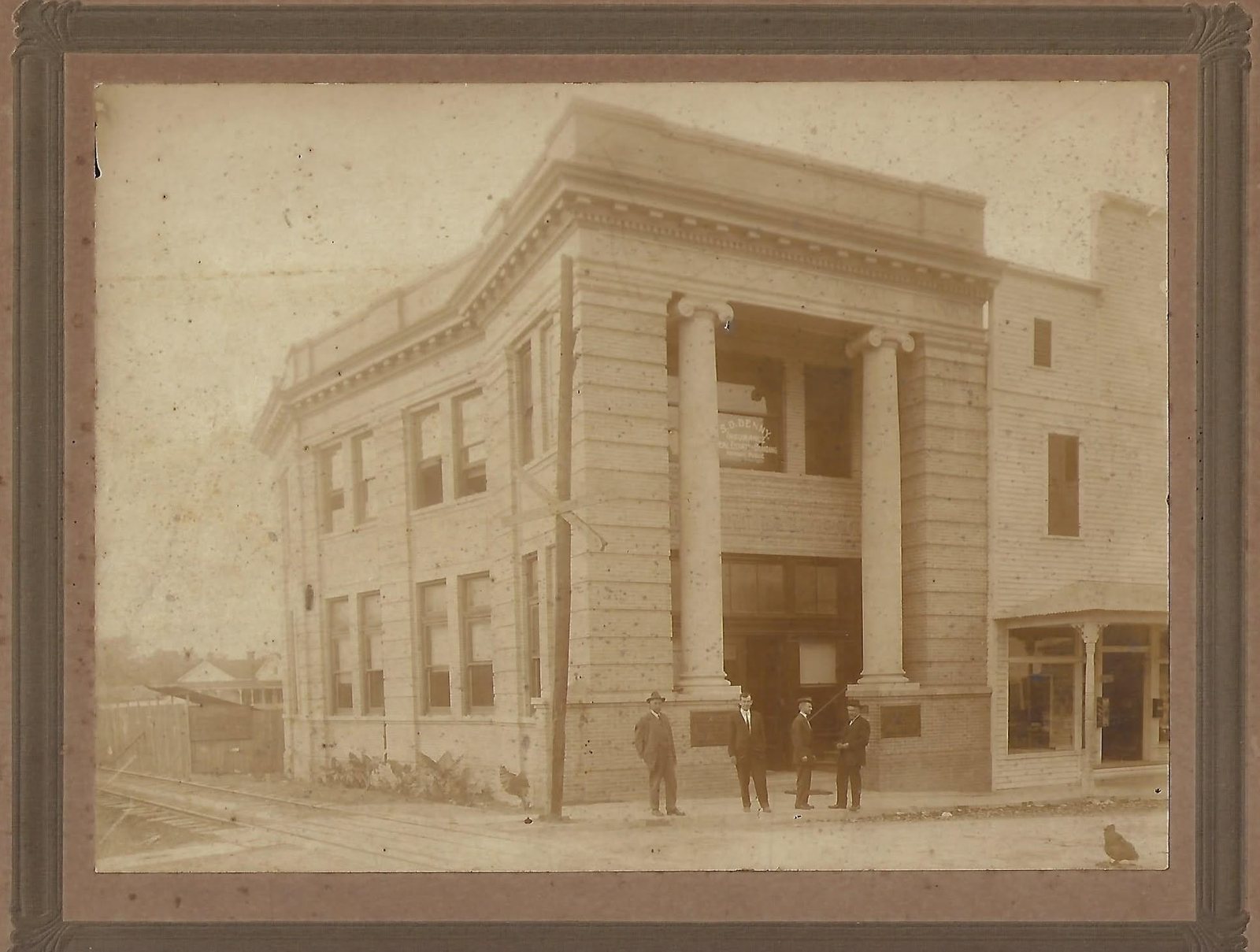
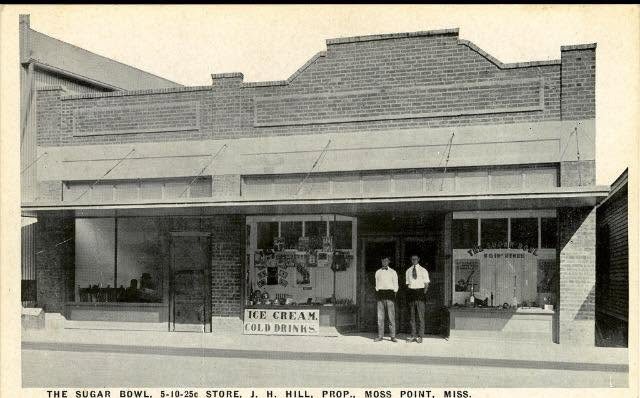
That weight came quickly. Cowan's General Merchandise set up along the unpaved street. Burnham's Drug Store opened in 1902, and believe it or not, it's still filling prescriptions today, more than a hundred and twenty years later. A national bank anchored the corner of Main and Post Office streets, and just down the block, J. H. Hill's Sugar Bowl sold fresh candy and cold drinks, with a bowling alley out back if you had a game in you.
14. A city, not a town
Most towns grow up and, in time, become cities. Moss Point skipped that step. In 1901 it incorporated directly as a city, already home to more than three thousand people. Governor Longino’s proclamation seated the first city government, with Charles H. Wood as the first mayor.
15. The marshal and the fire bell
When Moss Point became a city in 1901, it needed men to keep it. The Governor’s own proclamation named the first city officers, and among them the town’s first lawman, Marshal John Hill. Fire was the older fear. For years the sawmills had fought their own flames with hand pumps and hired watchmen, until the townspeople raised a volunteer fire company of their own. Twenty five men who dropped everything and came running at the sound of a whistle, with a steam engine that could throw water by the barrel. They hung fire whistles at the mills, so that wherever you stood in Moss Point, you would hear the call and know your neighbors were already on their way. A young city, learning to look after its own.
16. The school on Magnolia Street
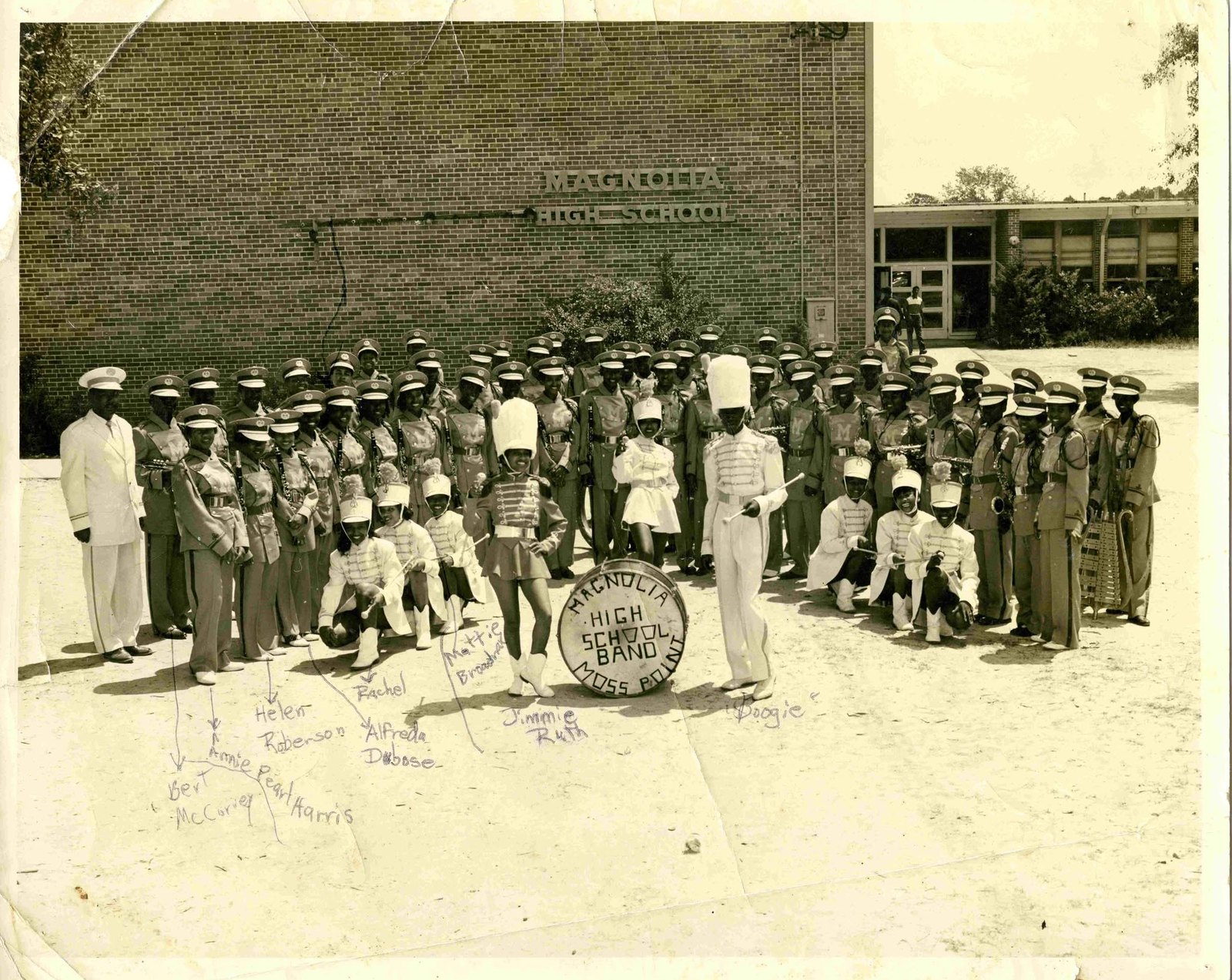
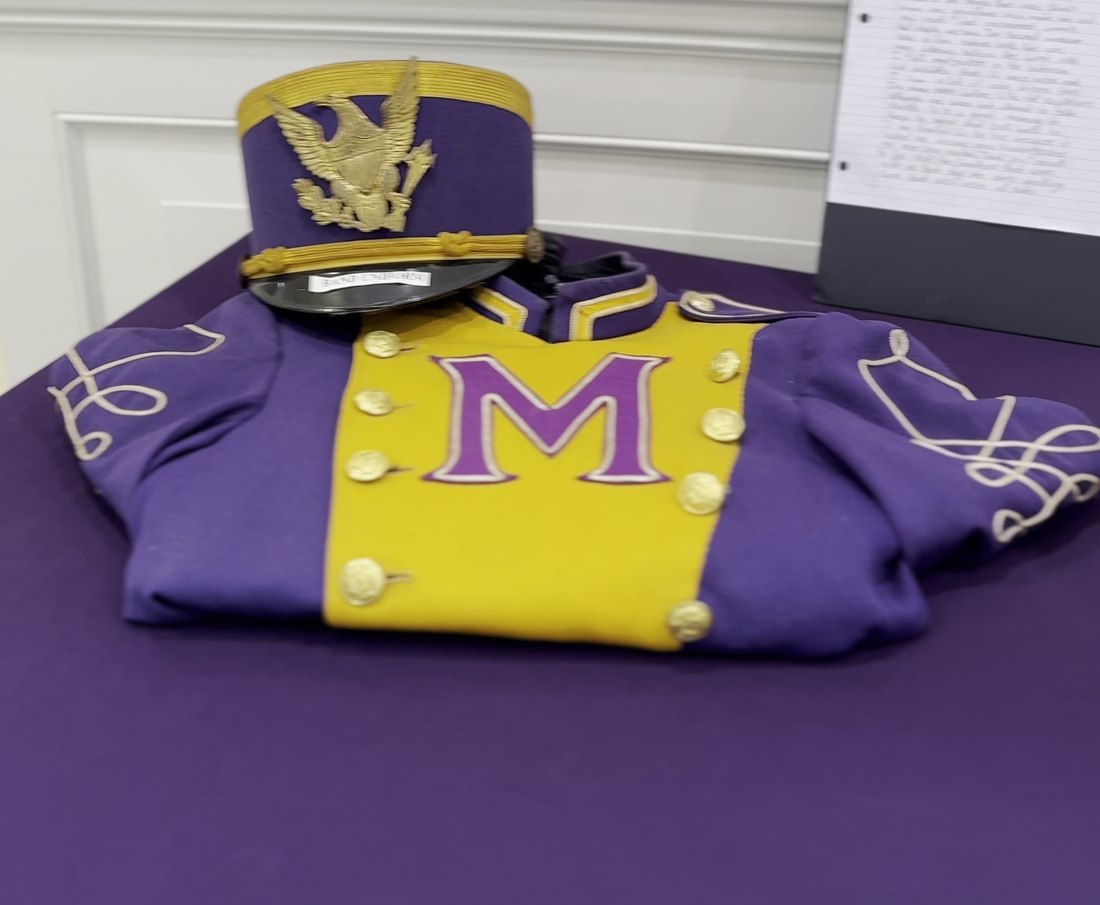
In 1902, a school opened on Magnolia Street for Moss Point’s Black children, on the ground where Saint Paul Methodist stands today. Magnolia School started with the elementary grades and kept climbing, sending its first graduating class out into the world in 1912. Through the long years of segregation it grew into the heart of Black Moss Point; its colors were purple and gold, and its teams and its band carried a proud name, the Monarchs.
17. The Finns of Kreole
New neighbors kept arriving, some of them from a very long way off. Around the turn of the century, Gideon Laine and his Finnish Land Company drew Finnish families down from the upper Midwest to the city's eastern edge, to a settlement first known simply as Laine. In 1907, they finished the Finnish Lutheran Church of Kreole, built on land that Laine gave, and it anchored that community for nearly eighty years. Later on, when the paper mill's tan kraft paper was branded Kreole Kraft for its creole color, the name stuck, first to the railroad station, and then to the neighborhood itself.
18. The town team
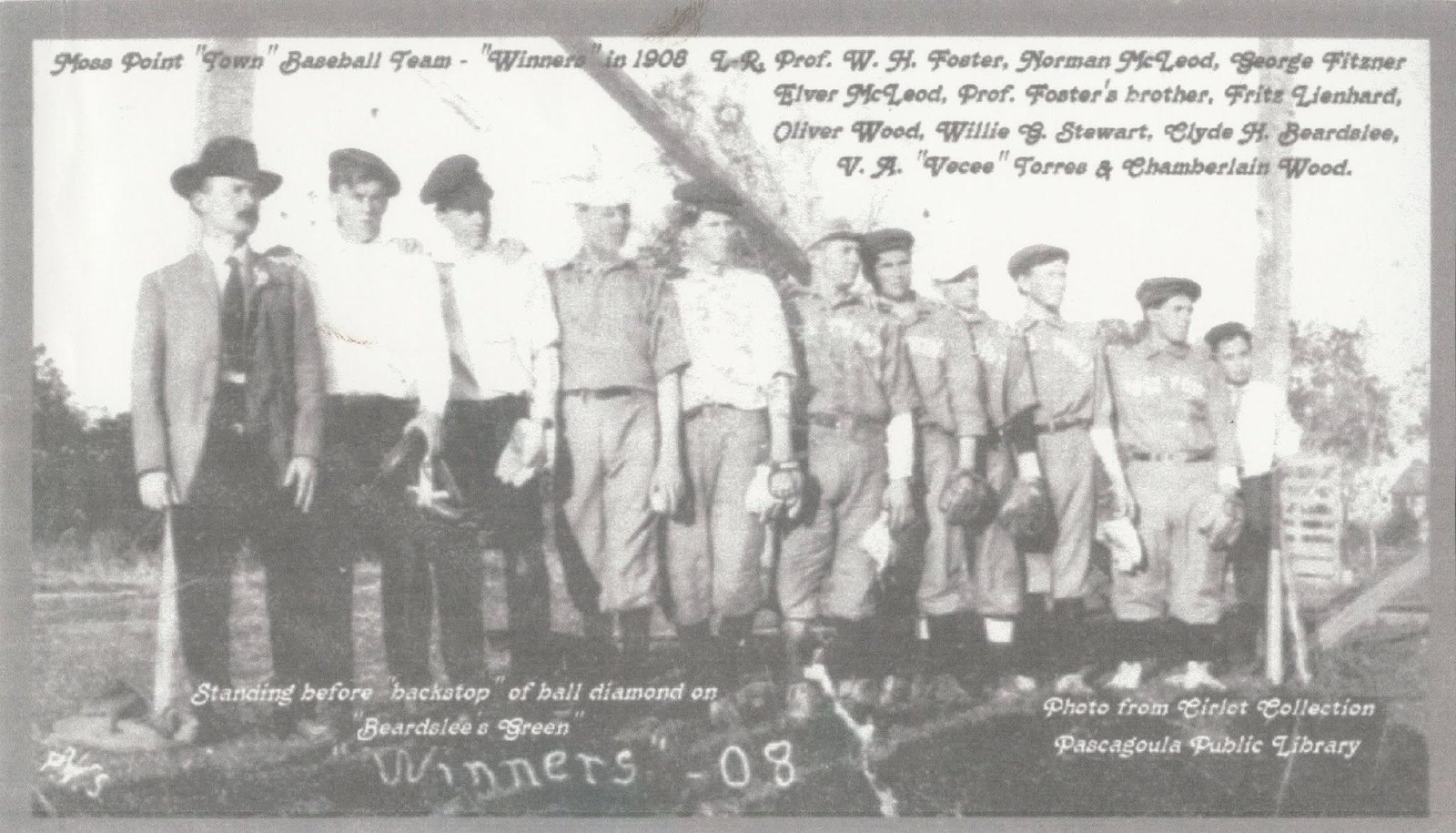
A young city needs more than work though, it needs its Saturdays. A few years after incorporation, Moss Point fielded a ball team good enough to call themselves the winners of 1908, and the players gathered for a photograph in front of the backstop at Beardslee's Green, townsmen and a couple of professors among them. It was exactly the kind of afternoon that knits a young city together.
19. Central High
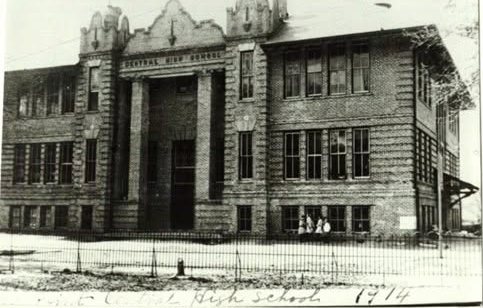
Moss Point had kept a high school since 1883, when classes met in a two story schoolhouse and families paid tuition to attend. Then in 1908 came Central High, a three story brick building that served the town for decades, until it was condemned as a fire hazard in 1942.
20. Paved with its own promise
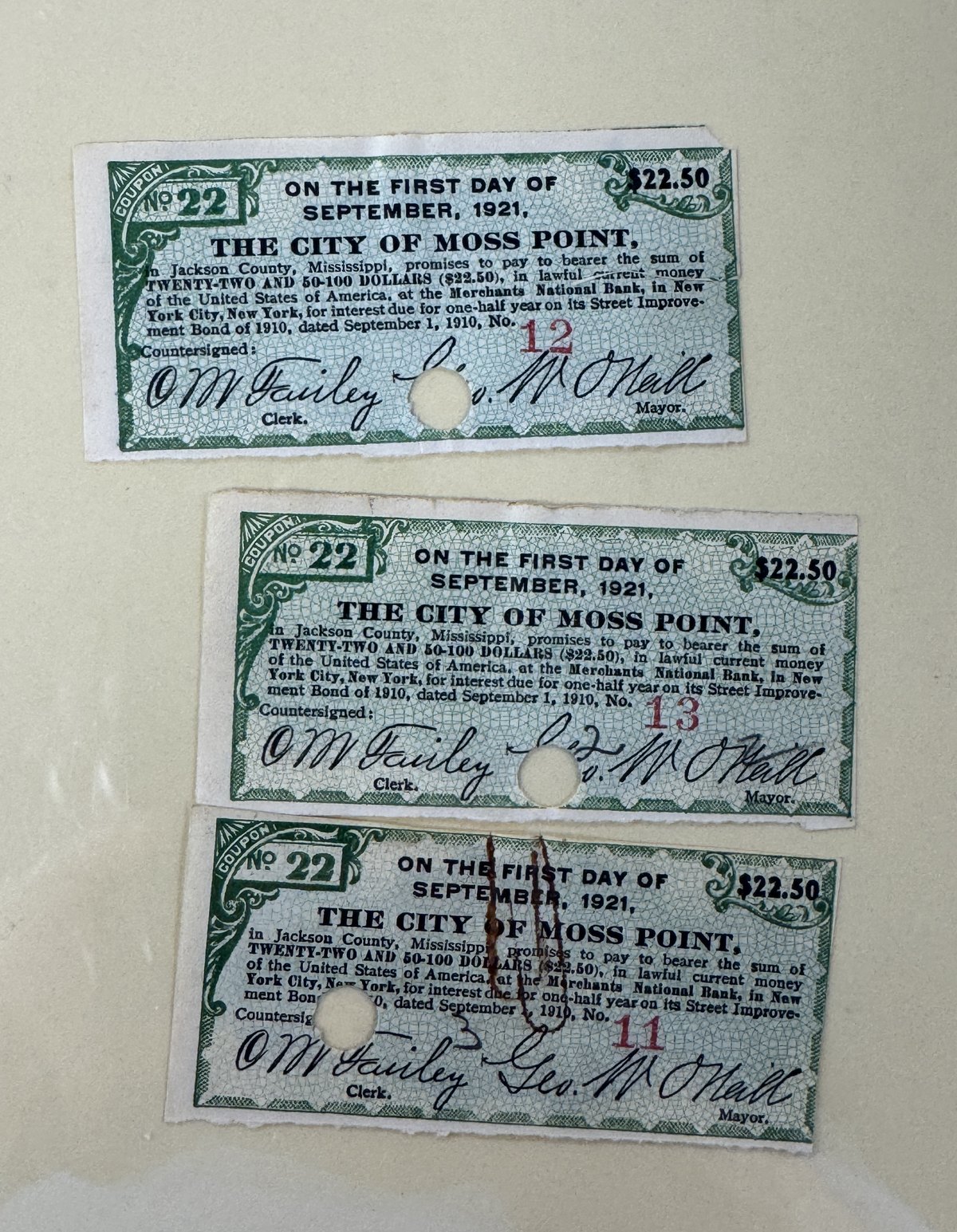
The young city was learning to carry itself like a grown one. Nine years after incorporation, Moss Point paved its streets the way the big cities did, by selling bonds. The Street Improvement Bonds of 1910 paid four and a half percent interest, with coupons payable at a bank in New York City. A handful of those coupons still survive, every one punched through the center, the mark left when the city paid each one back. Moss Point paid every penny it promised.
21. The year it burned twice
Then came the hardest night the young city had known. Just past midnight on March seventeenth, 1912, fire broke out downtown, and in less than an hour the whole business section was gone. The news went out on the wires as far away as Washington. Moss Point had its volunteer firemen and their steam engine, but no water mains and no hydrants to feed them.
So the city went to work. That same year, the Legislature gave Moss Point the power to build waterworks and set fire limits, and the city ordered a brand new fire engine with hose carts to match. When fire came again that December, the new engine met it, a Dantzler tug pumping river water alongside, and the newspaper wrote that the new engine had more than paid for itself. Burned out in March, ready by December. That has always been the Moss Point way.
22. Paper and brick
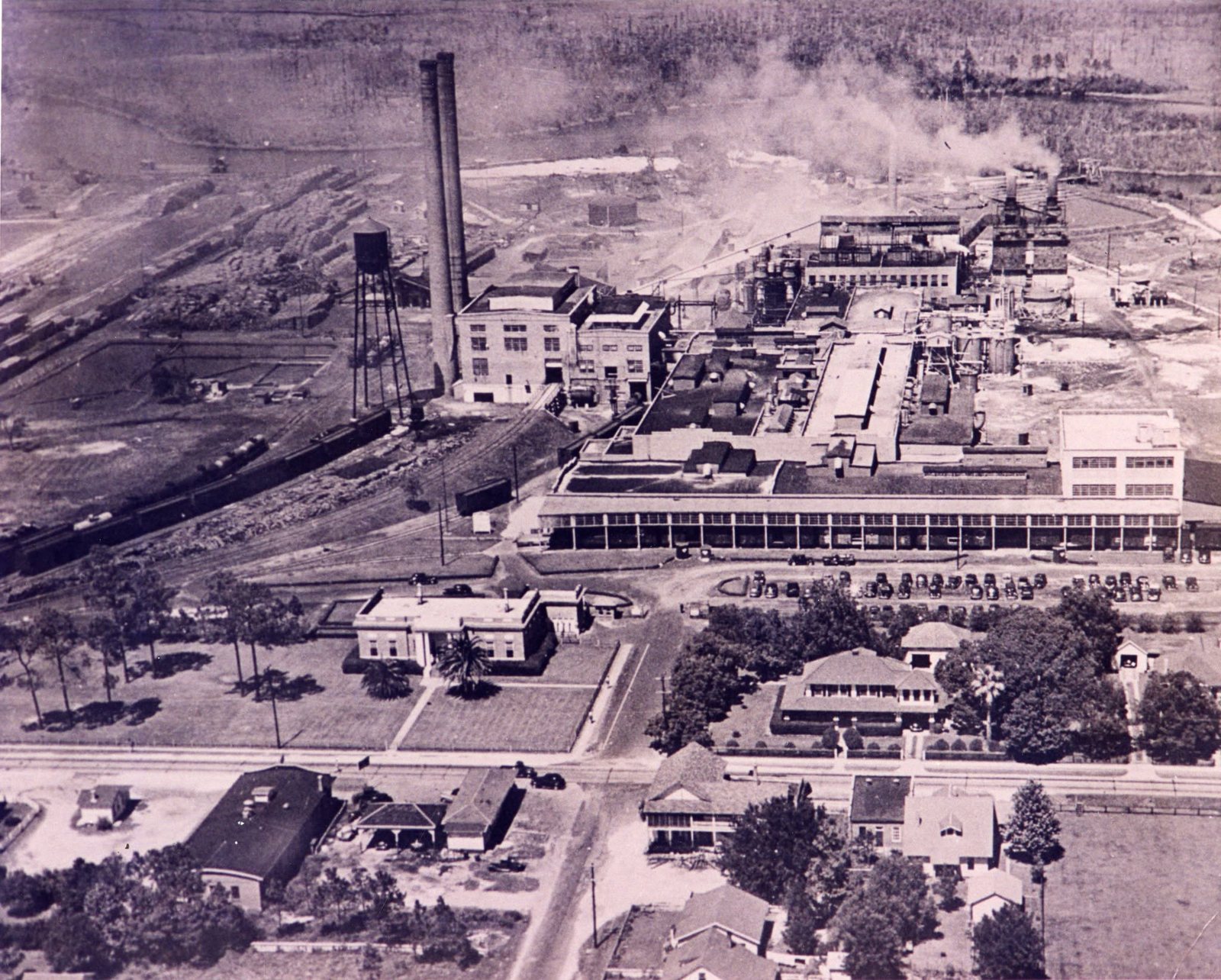
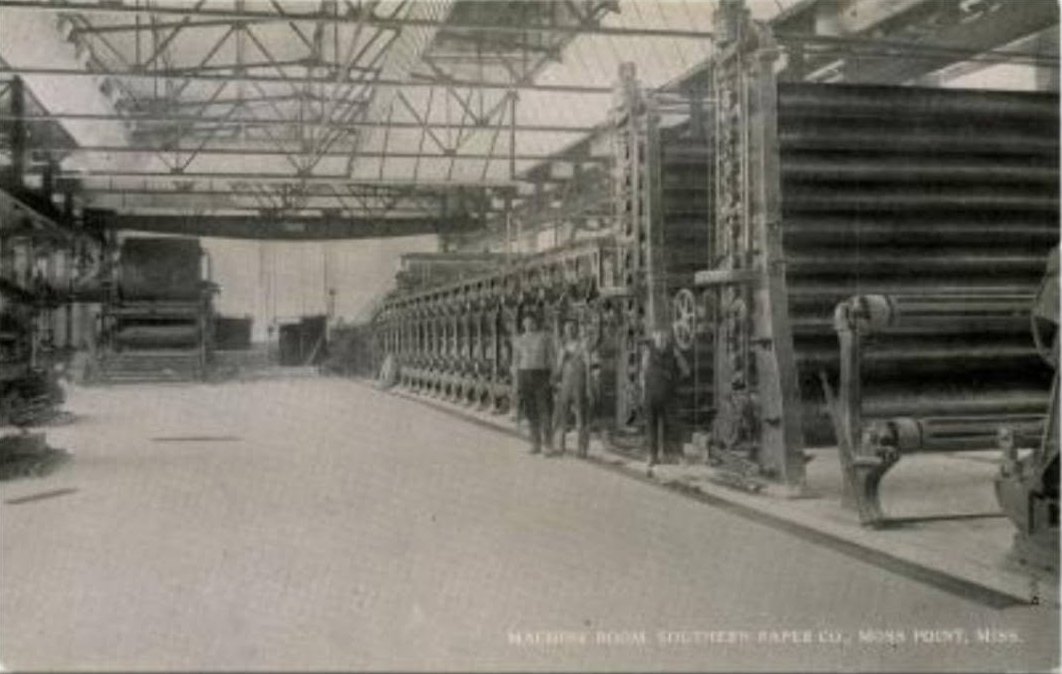
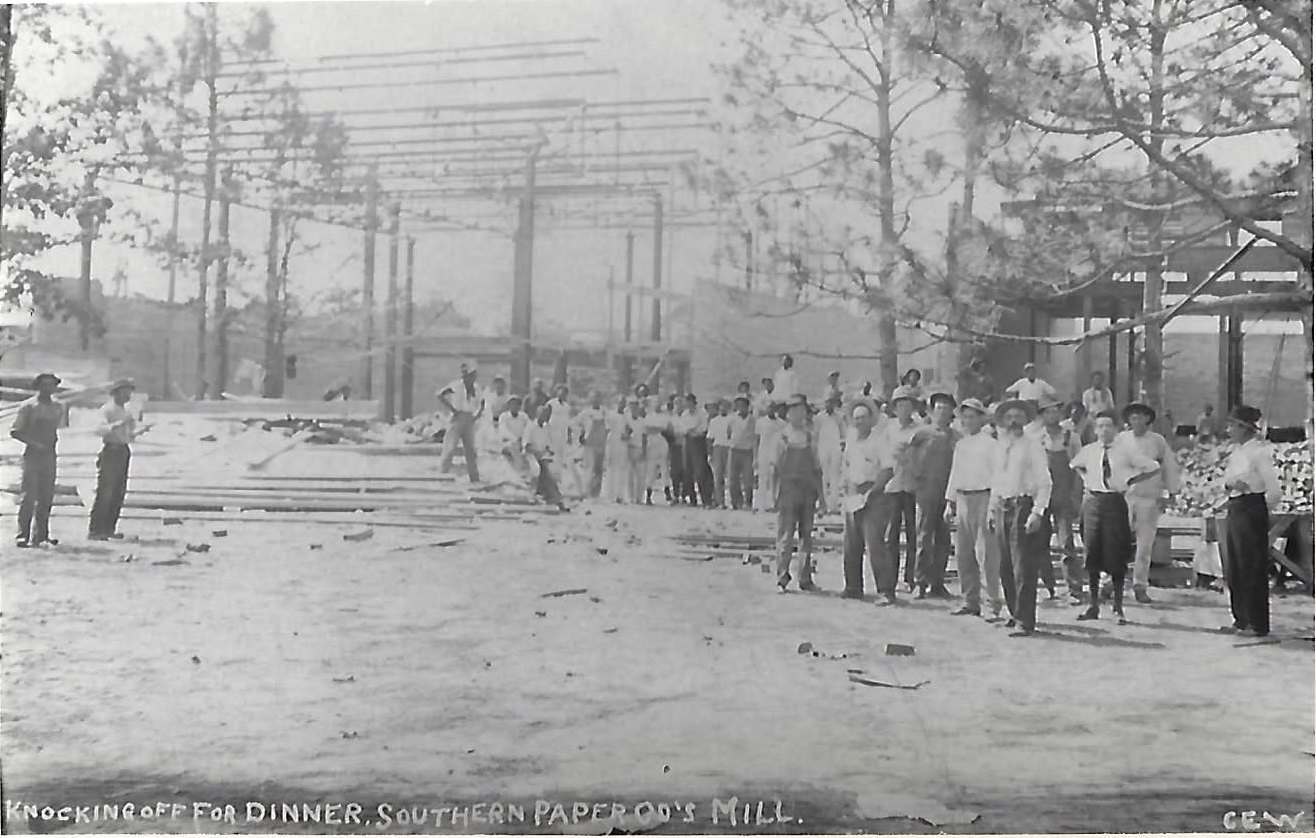
When the great pine forests began to thin, Moss Point kept right on working. The Southern Paper Company mill rose on the riverbank in 1913, joined International Paper in 1928, and made paper here for the better part of a century. The mill had company too, with factories pressing the local river clay into brick.
23. The whole town turned out
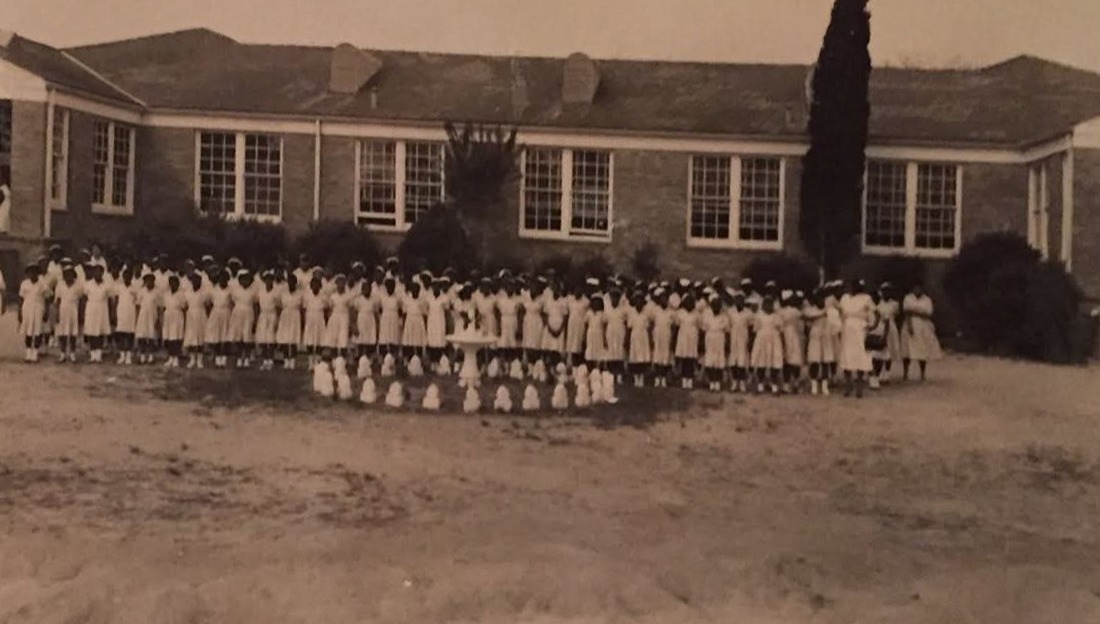
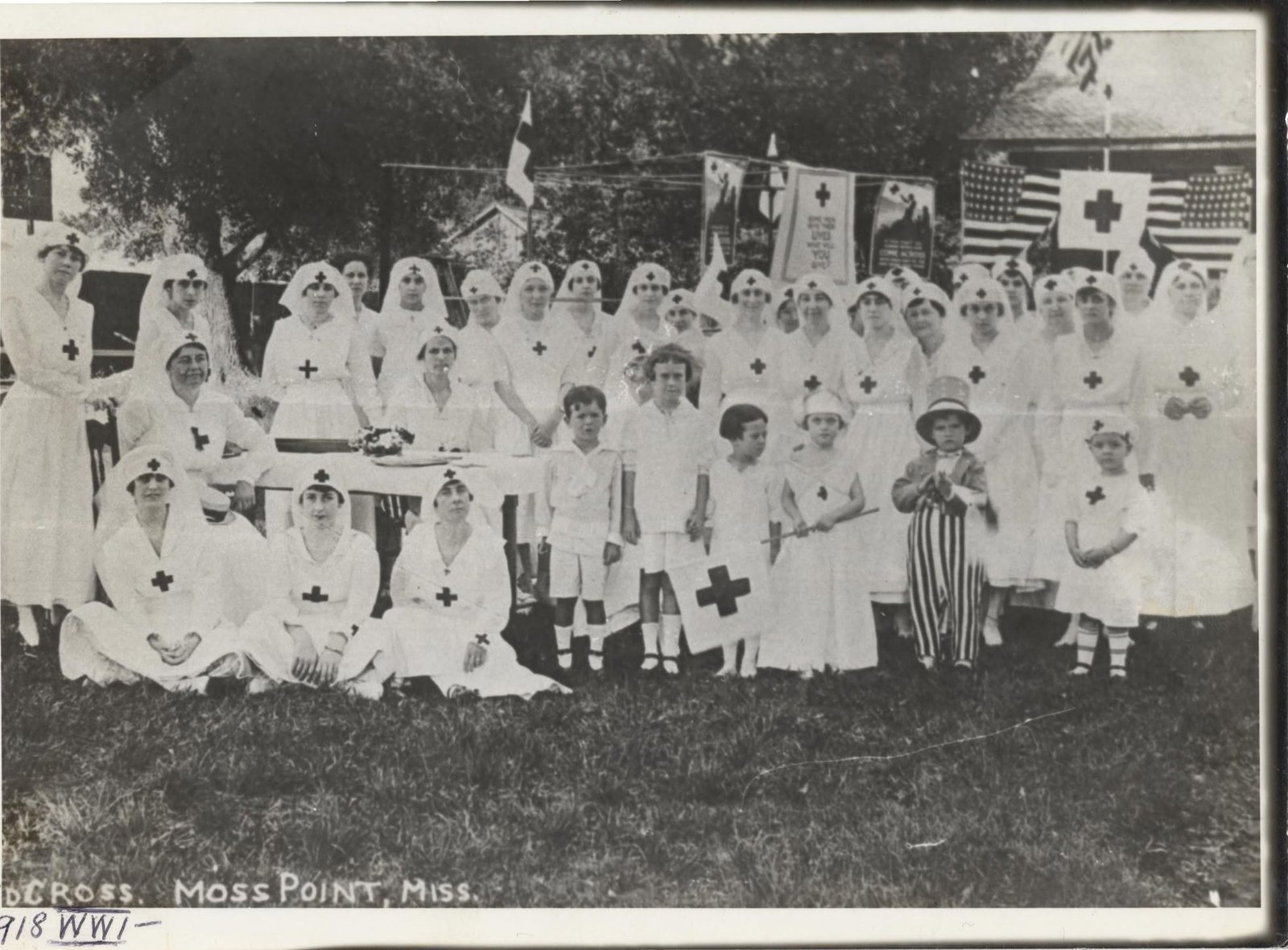
When the first World War reached the coast, Moss Point answered in white. The local Red Cross chapter, women and children together beneath the flags, organized relief and rolled bandages for the boys at the front. The photograph they left behind is one of the oldest group portraits the city keeps, and it shows you a place that has always shown up for its own.
24. The Pine Knot Special
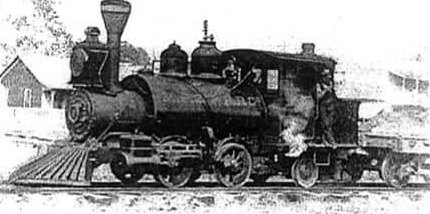
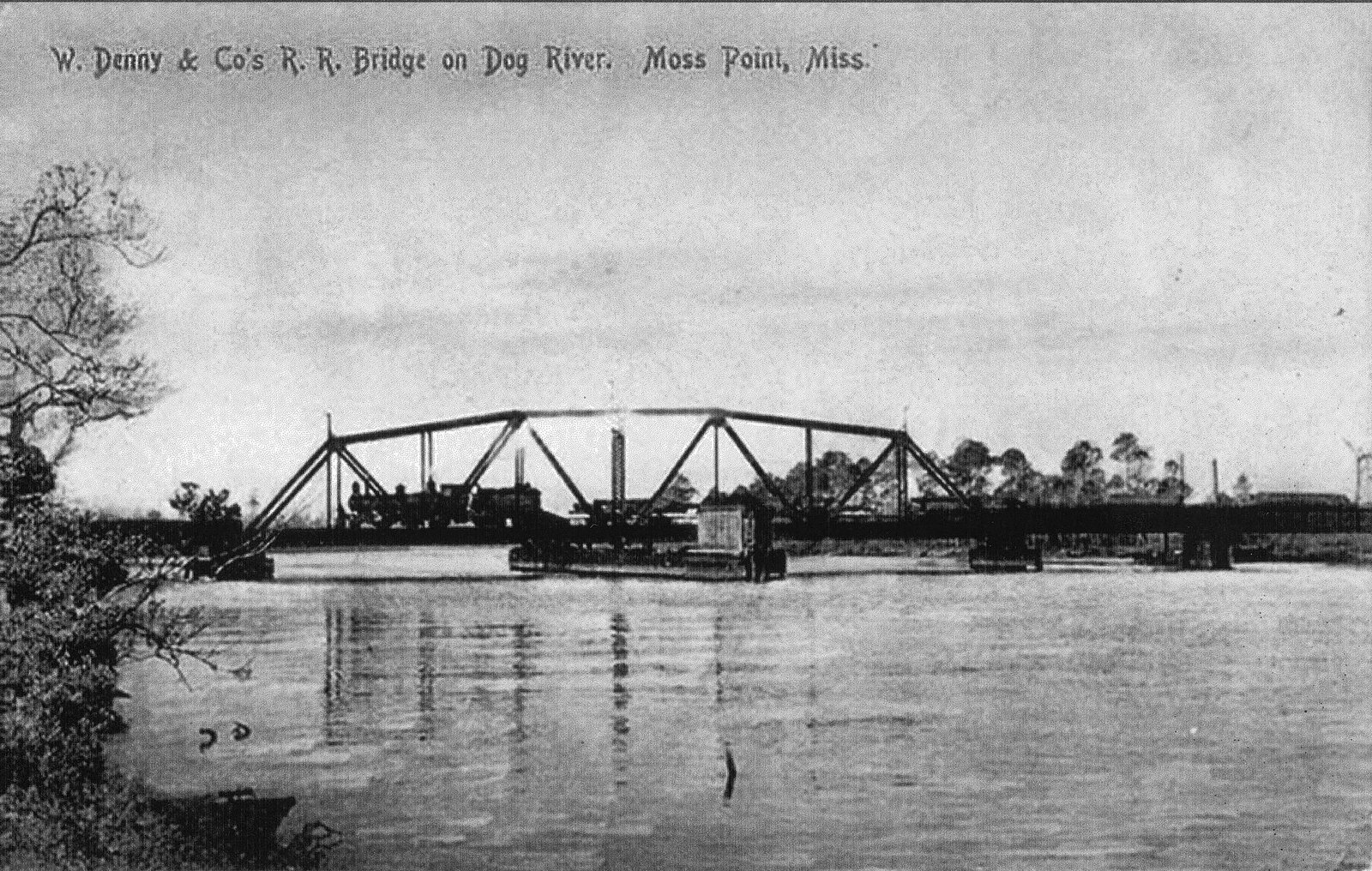
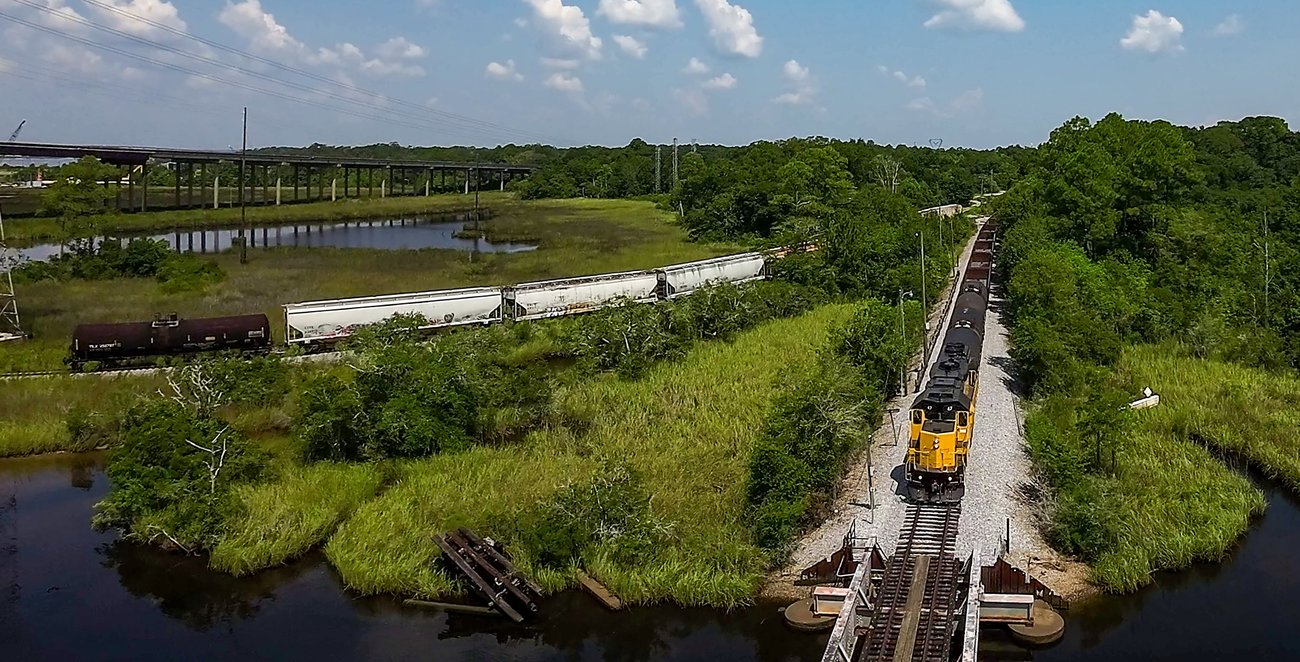
And whether it was lumber for the ports or bandages bound for the front, everything Moss Point sent into the world moved on rails as well as rivers. The line between the twin cities had run since 1895, and after 1902 the Denny lumber firm pushed it deep into the timber country. A railroad once so lean it burned pine knots for fuel took the name Mississippi Export Railroad in 1922, and made its headquarters right here in Moss Point.
25. The Great Fire
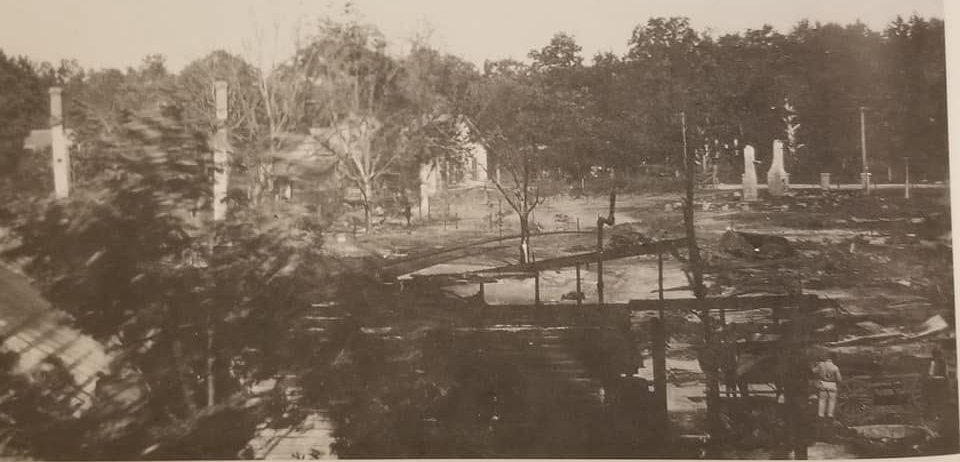
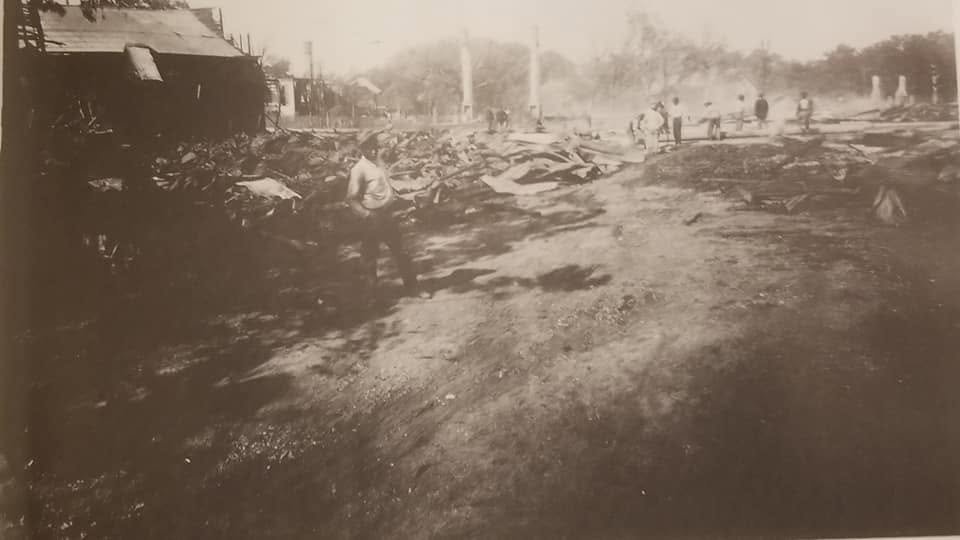
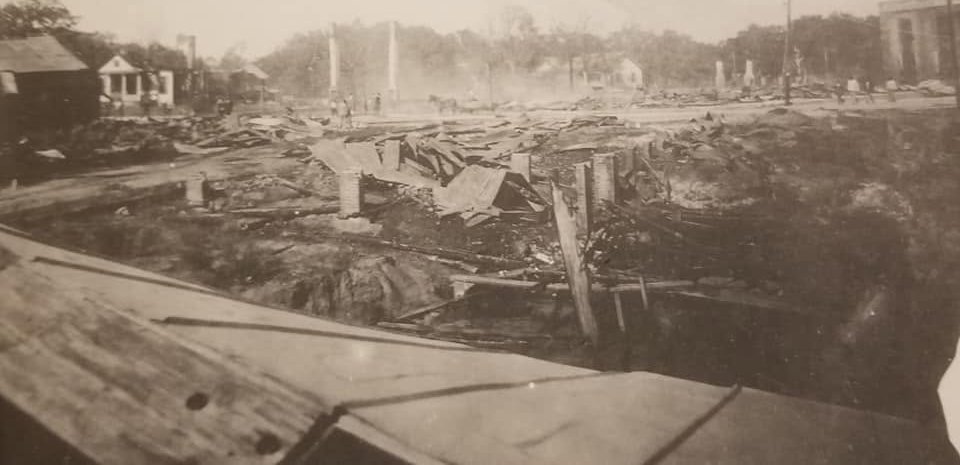
In 1923 a great fire swept the heart of Moss Point. It tore through the downtown business district and the homes around it, left many families with nothing, and burned until only the brick chimneys stood against the sky. Within a couple of years, new brick storefronts had risen on the same ground, and Main Street was open for business again.
26. The Battle of the Cats begins
Two years later, with the ash barely cleared, Moss Point picked a new kind of fight, the Friday night kind. The city fielded its first football team in 1925, and promptly lost its first meeting with Pascagoula by six touchdowns. The rivalry that grew between the Tigers and the Panthers, the Battle of the Cats, ran so hot that after the 1933 game, the two schools called the whole thing off for fifteen years.
27. The fire department
The Battle of the Cats was not the only thing getting organized. After burning twice in eleven years, Moss Point answered the flames for good. In 1926, the city built its first municipal waterworks, laying its water mains with firefighting in mind, and moved City Hall into the new brick pump house on McInnis Avenue, crowned with an electric fire siren that could be heard for two miles.
The volunteer firemen who had once come running to mill whistles now rolled on motor engines, ladders racked and ready, out of a station of their own. That sturdy little pump house would go on serving the city for generations, in time as a firehouse itself. Moss Point had learned fire the hard way. It did not intend to learn it again.
28. The street at full stride
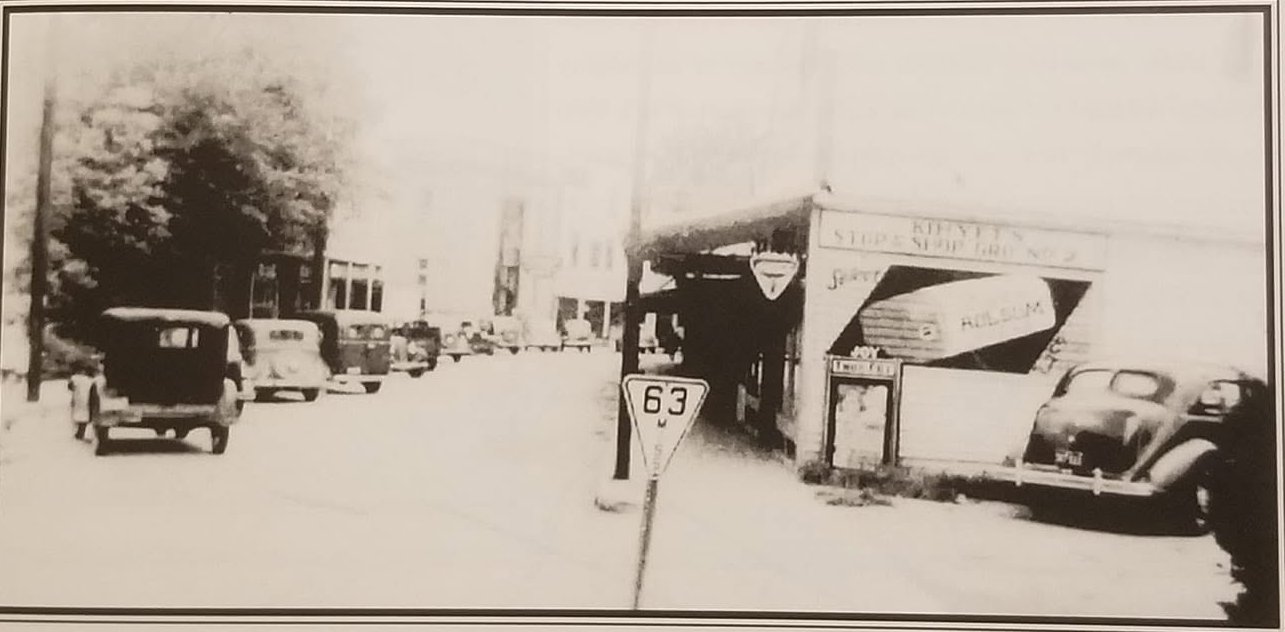
And behind that new protection, downtown never broke stride, even through the hardest decade in American memory. By the 1930s, Main Street was paved and busy, cars angled in at the curb in front of the drug store and the five and dime, and Highway 63 ran straight through the middle of a downtown at the very height of its trade.
29. Miss Mississippi goes to Atlantic City
In fact, those streets had their own claim to fame that decade. In August of 1933, a young Moss Point schoolteacher named Dorothy Eley, the daughter of the town physician, won a statewide contest down in Biloxi and carried the title of Miss Mississippi all the way to the national pageant in Atlantic City, where she placed among the semifinalists. Now, the official Miss Mississippi line begins the following year, so the record books start without her. But her hometown never needed convincing. She taught school here for decades, and when she passed in 2005, her obituary said it plainly. She was the first Miss Mississippi.
30. Lovers Lane
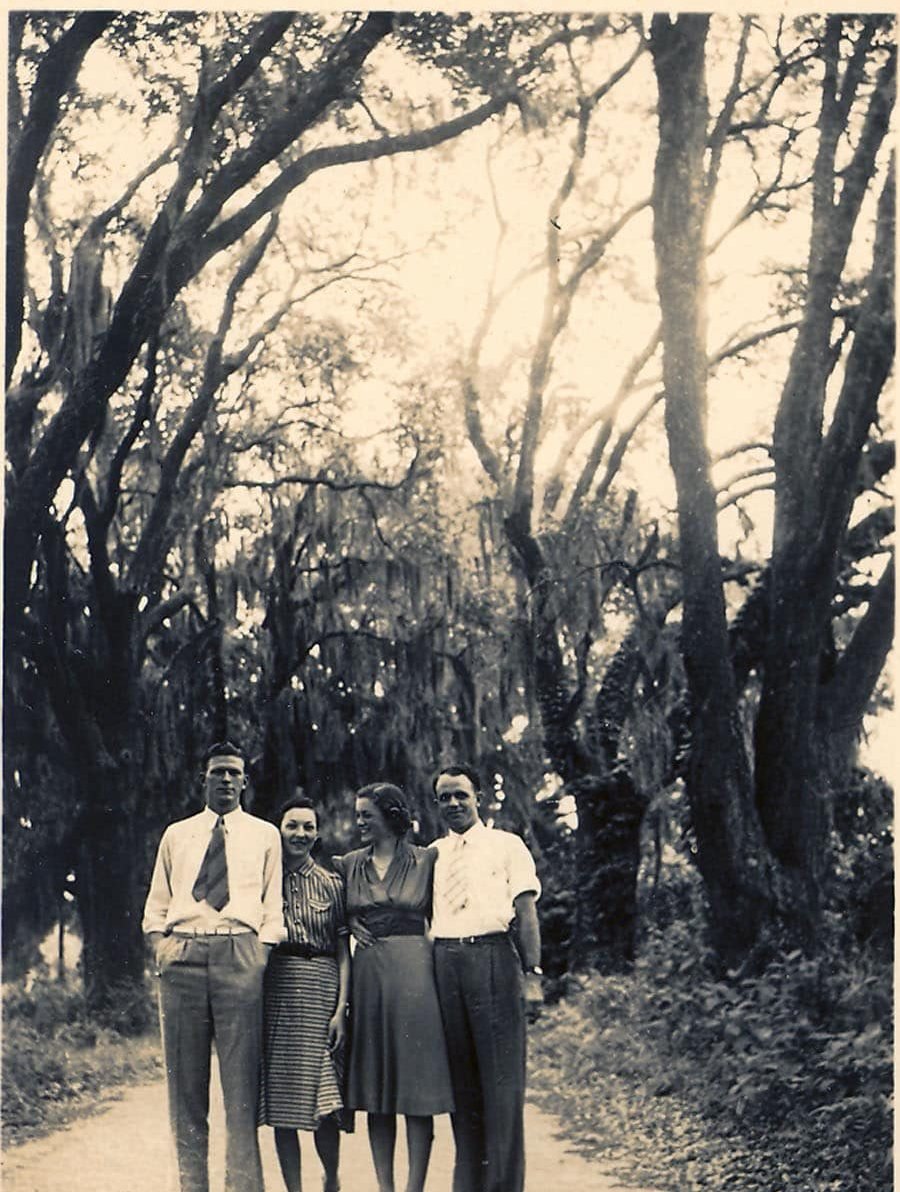
Not all of the town's treasures ever made the record books. For generations, a tunnel of live oaks arched right over Griffin Street, and everyone in Moss Point simply knew that stretch as Lovers Lane. Couples courted in its shade, and folks here have long called it one of the prettiest spots on the coast.
31. The brick school at Magnolia
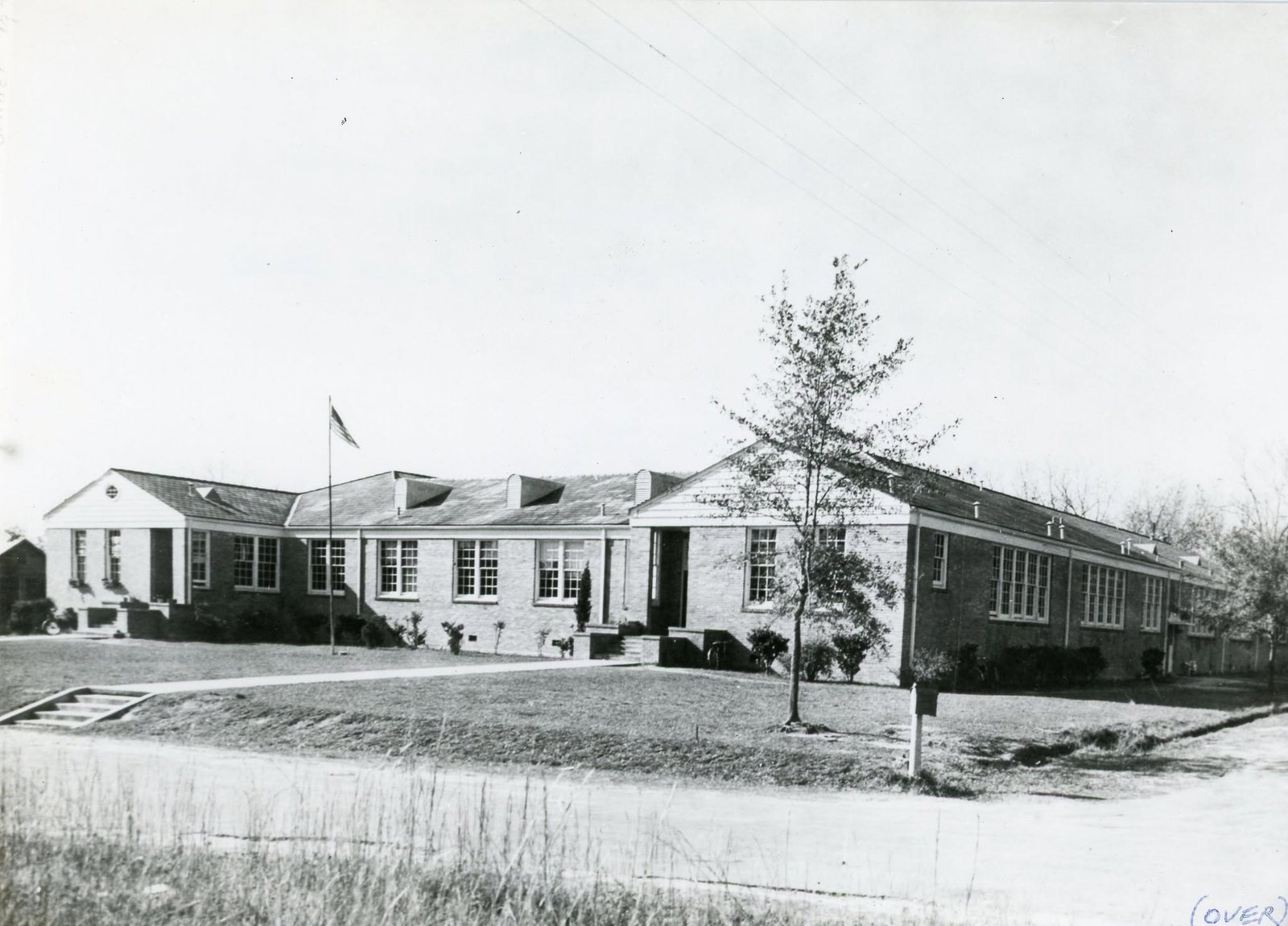
The city kept building for its children. In 1941, President Roosevelt approved the money and the town voted almost unanimously to match it, raising two new schools at once. At Magnolia, that meant the first brick schoolhouse Moss Point had ever built for its Black students, with a cafeteria and new classrooms added after the war. In its prime, under Principal Henry L. Whisenton, that campus held seventeen classrooms, shops teaching carpentry, bricklaying and cabinet making, and a gymnasium that seated seventeen hundred, one of the finest anywhere on the coast. That school is gone now, but what it taught never left.
32. The new high school
When Central High was condemned in 1942, the town did not wait long. In 1943, on a Sunday in February, Moss Point dedicated its new high school, built partly from the salvaged brick of the old one, with a young principal named Eddie Khayat at its door. For a generation, Moss Point High taught the town’s white children while Magnolia carried its Black ones. Two proud schools, on two sides of one town, walking separate roads toward the same future.
33. When Elvis came to the shipyard
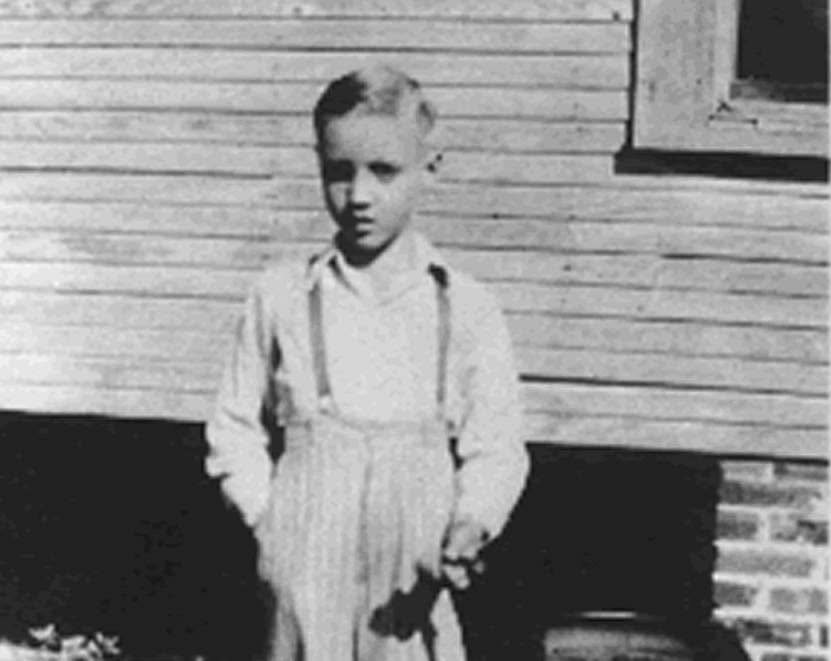
Then the war came, and the quiet didn't last. The Second World War swelled the twin cities with shipyard workers until every spare room, trailer, and tent had a tenant. And as the story goes, a boy named Elvis Presley spent a short, hot stretch of that decade here on the coast, while his father Vernon took work building boats at the Moss Point shipyard. The pay was steady, the summer was brutal, and before long the Presleys packed up for home. The boy grew up to be the most famous voice in America. And the coast kept the story for itself.
34. The municipal pool
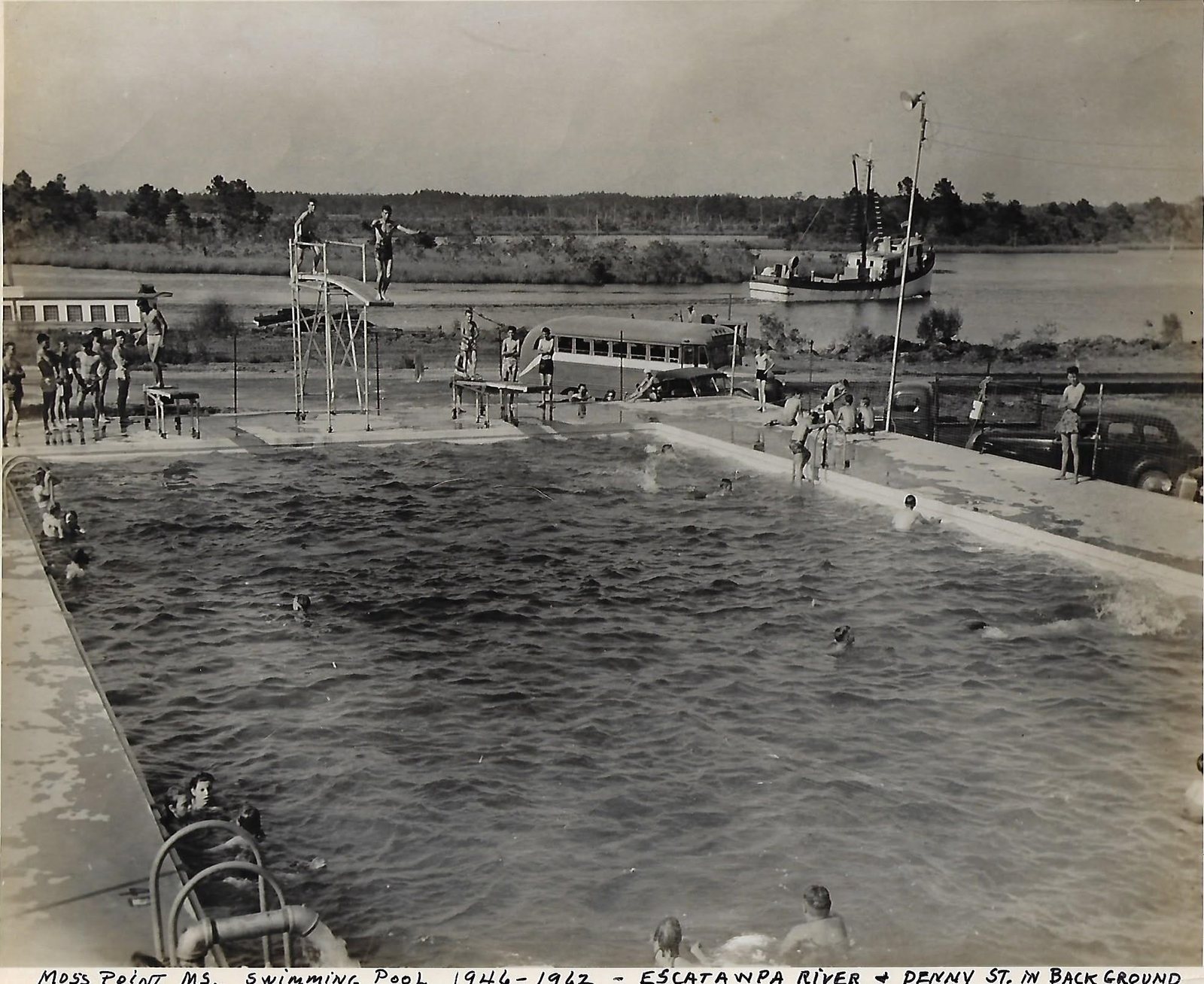
After the war, summer came back, and for a whole generation, summer in Moss Point meant the municipal pool on the Escatawpa. It meant the high dive, the school bus parked at the fence, and a shrimp boat sliding past on the river just beyond the swimmers. The pool ran from 1946 into the early sixties, and for the kids who grew up here, it was the whole summer.
35. They bury the hatchet
Come fall, the town turned back to its oldest feud. The Battle of the Cats had sat silent for fifteen years, until 1948, when the rivalry finally returned to the field. Local lore says the two schools dug a grave at midfield that day and buried a hatchet in it at halftime. Moss Point won that night, twenty four to nothing, its first victory in the whole series.
36. The menhaden boats
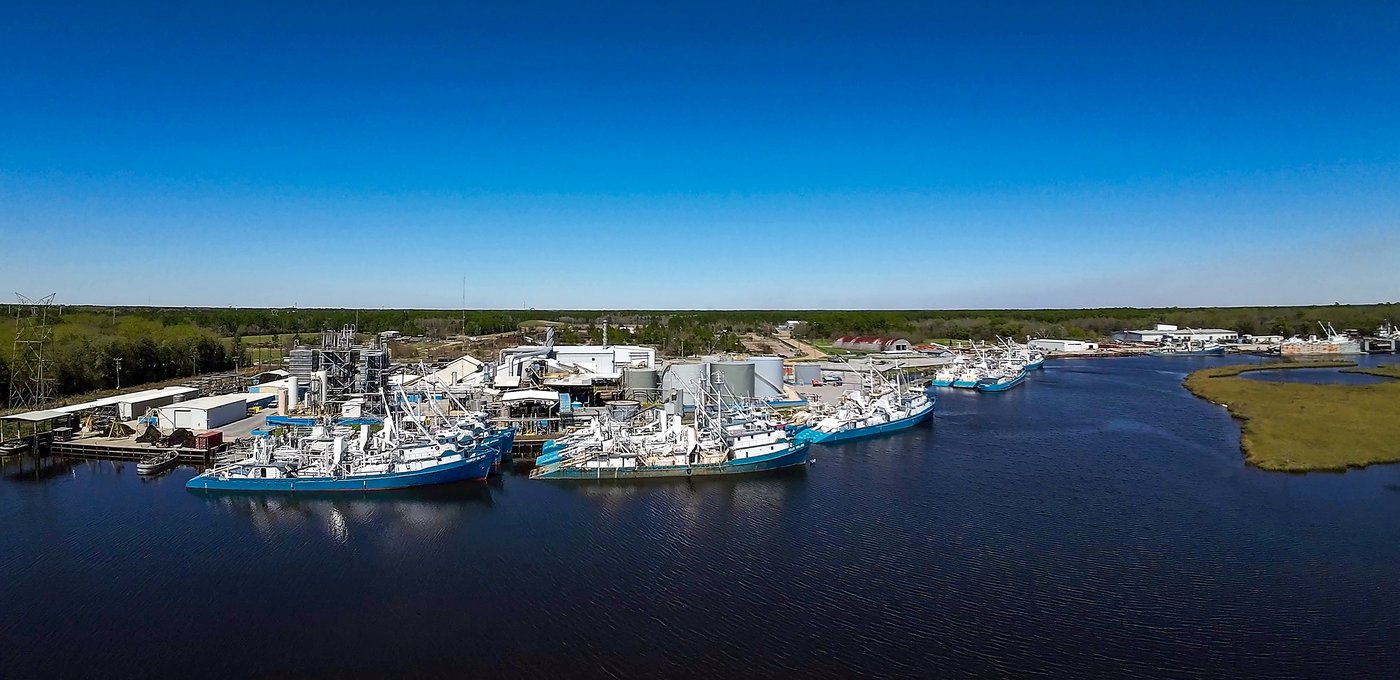
While the town cheered under the Friday night lights, down on the river a new kind of harvest was taking hold. In the 1950s, Omega Protein began working the menhaden, those small, oily fish, into meal and oil on the banks of the Escatawpa. The boats went out into the Gulf, and the shipyard in town built the very steamers that chased them.
37. New work on Elder Ferry Road
And the boats were not the only new work on the river. In 1952, a chemical plant rose on Elder Ferry Road, and for most of the next fifty years it ran under names the whole town knew, Thiokol, and later Morton Thiokol. Inside, Moss Point workers turned out polymers, sealants, and adhesives that went into products all over the world, including the liquid polysulfide the industry called rocket polymer. Hundreds of people drew a paycheck there, and Elder Ferry Road became one more road this town took to work.
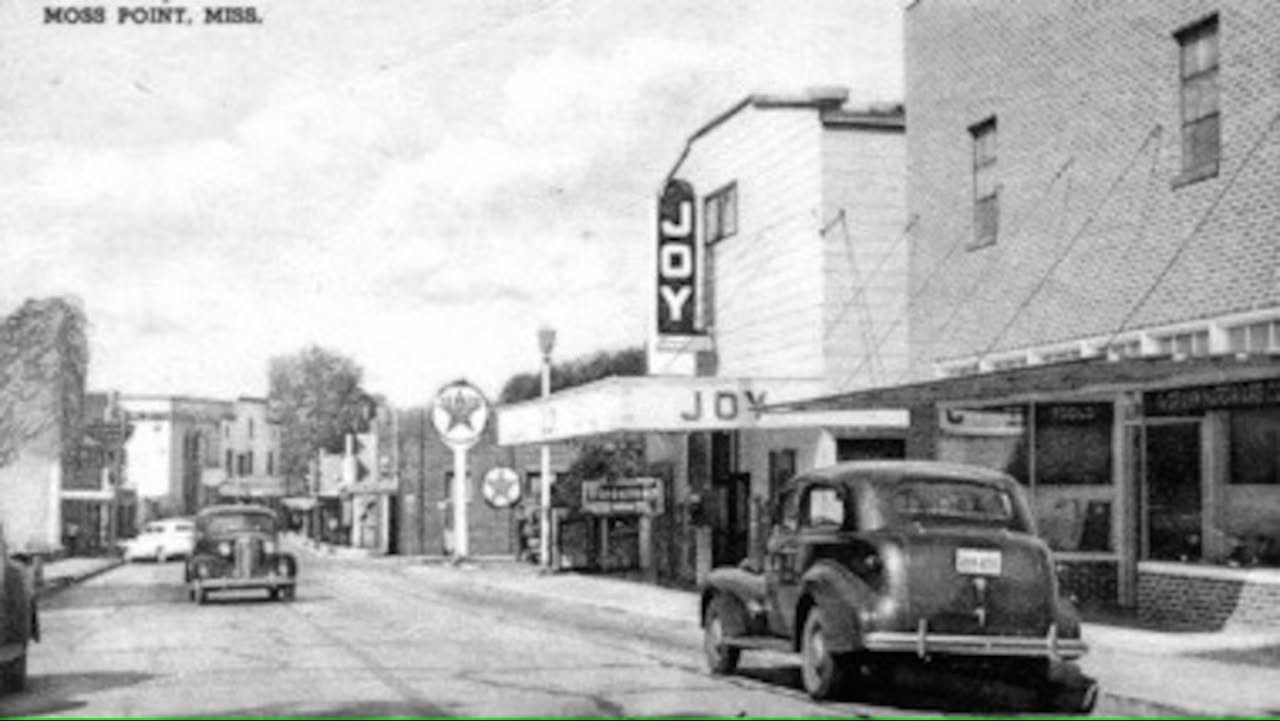
38. The night the Joy went dark
Back up in town, when the day's work was done, the brightest lights on Main Street spelled out a single word. Joy. The Joy Theatre was the downtown picture show, its tall marquee rising over the storefronts with a Texaco station on the corner. It had burned once already, back in 1935, only months after it first opened, and the town built it right back the very next year. But on New Year's Eve of 1958, just an hour after the last show let out, fire took the Joy a second time. And this time, as folks here still tell it, it burned so hot that it cracked the windows of the restaurant across the street. The marquee never lit again. But ask anyone who grew up here, and they'll still tell you about the night the Joy went dark.
39. A blues tradition
Through all those working years, this city kept a soundtrack going. The Black community of Moss Point produced an extraordinary run of musicians, remembered today with a marker on the Mississippi Blues Trail along Main Street. Charles Fairley toured with Otis Redding. The Nelson brothers traveled with the great shows. And generation after generation came up through the Magnolia High Monarchs band.
40. Freedom Summer on the river
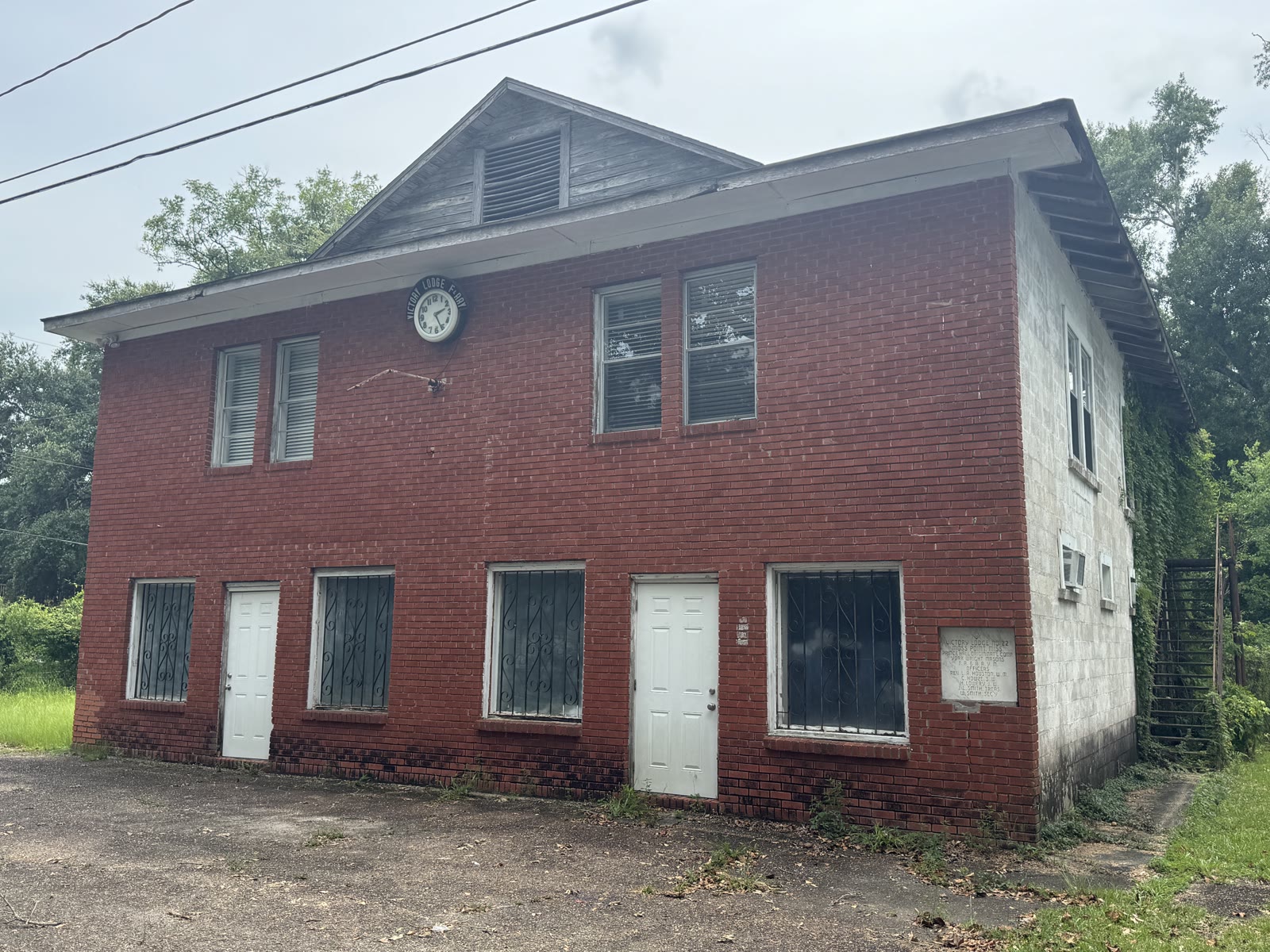
In the summer of 1964, Moss Point became an active organizing ground for the movement. Freedom School classes met at community buildings including Second Baptist Church and the Victory Lodge on Bowen Street, teaching Black history, civics, and the vote to forty students at first and eighty by the second session. The mass meetings filled the Knights of Pythias Hall on Magnolia Street, the center of Black community life and a stage that had hosted James Brown and B.B. King, with as many as three hundred people, even after the hall was firebombed that June. It was dangerous work. On July sixth, as a meeting sang, gunfire from a passing car wounded seventeen year old Jessie Mae Stallworth, and when Black men reported the shooting, it was they who were arrested. Stokely Carmichael came that July, and Doctor Martin Luther King Junior that August, and by summer's end the movement here had gathered roughly twelve hundred Freedom Democratic Party registration forms. One of the local teenagers who lived it, John Davis, later called it the greatest experience of his life.
41. The river built ships
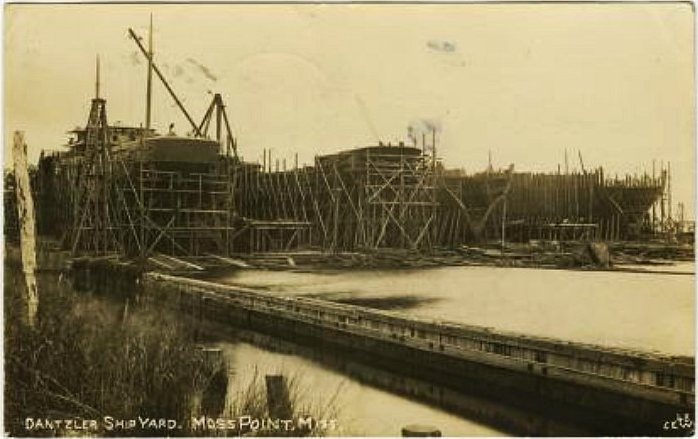
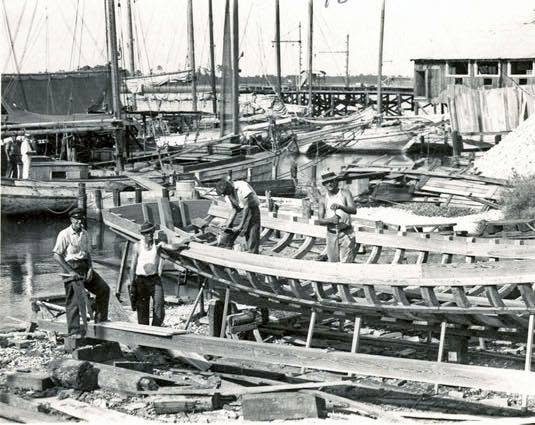
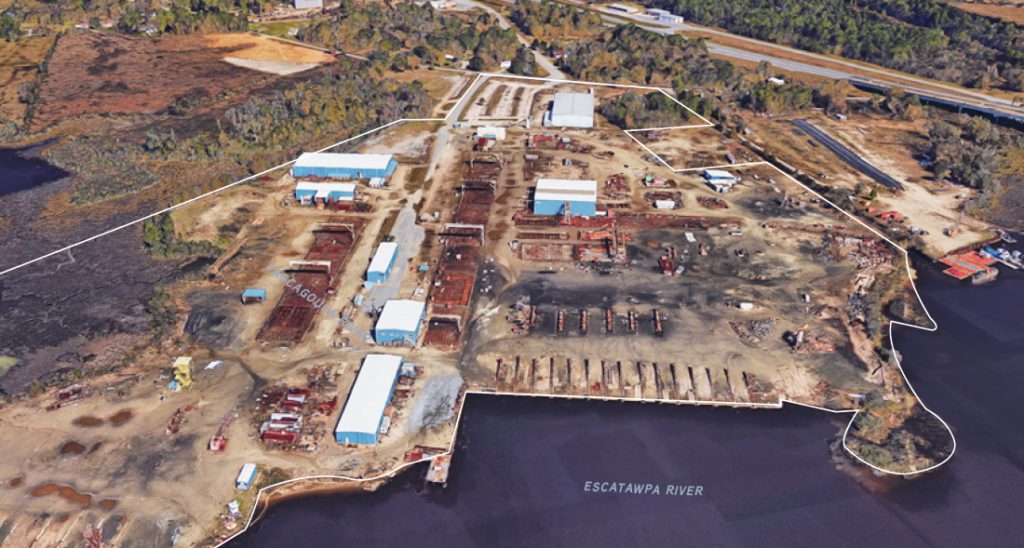
And all through those changing years, the riverbank kept building. Shipbuilding here goes back to the 1880s, when John De Angelo, born in Sorrento, Italy, opened the yard everyone called the Italian Shipyard, turning out wooden schooners, tugs, and barges on the Escatawpa. In 1966, Halter Marine came to the river, and the boom was on. James K. Walker Marine took over the old Italian Shipyard site by the Highway 613 bridge, the yard this town still remembers as the Walker Yards. In 1978, Moss Point Marine opened its gates in Escatawpa. And by that same year, the Halter yards were building nearly half of all the offshore supply boats in the world, and some of them slid into the water right here.
42. The last class of Monarchs
That same era closed a chapter this city still honors. In the spring of 1970, Magnolia High School graduated its last class of Monarchs. With integration, Moss Point’s students came together under one roof at Moss Point High, and the Magnolia campus carried on as the junior high. But nobody who wore the purple and gold ever stopped being a Monarch. The alumni association they founded in 1981 still fills these streets every other Fourth of July weekend for the Great Magnolia Homecoming. And in 2026, the Monarchs and the city broke ground together on Magnolia Memorial Park, set to open for the school’s one hundred and twenty fifth anniversary.
43. Main Street in color
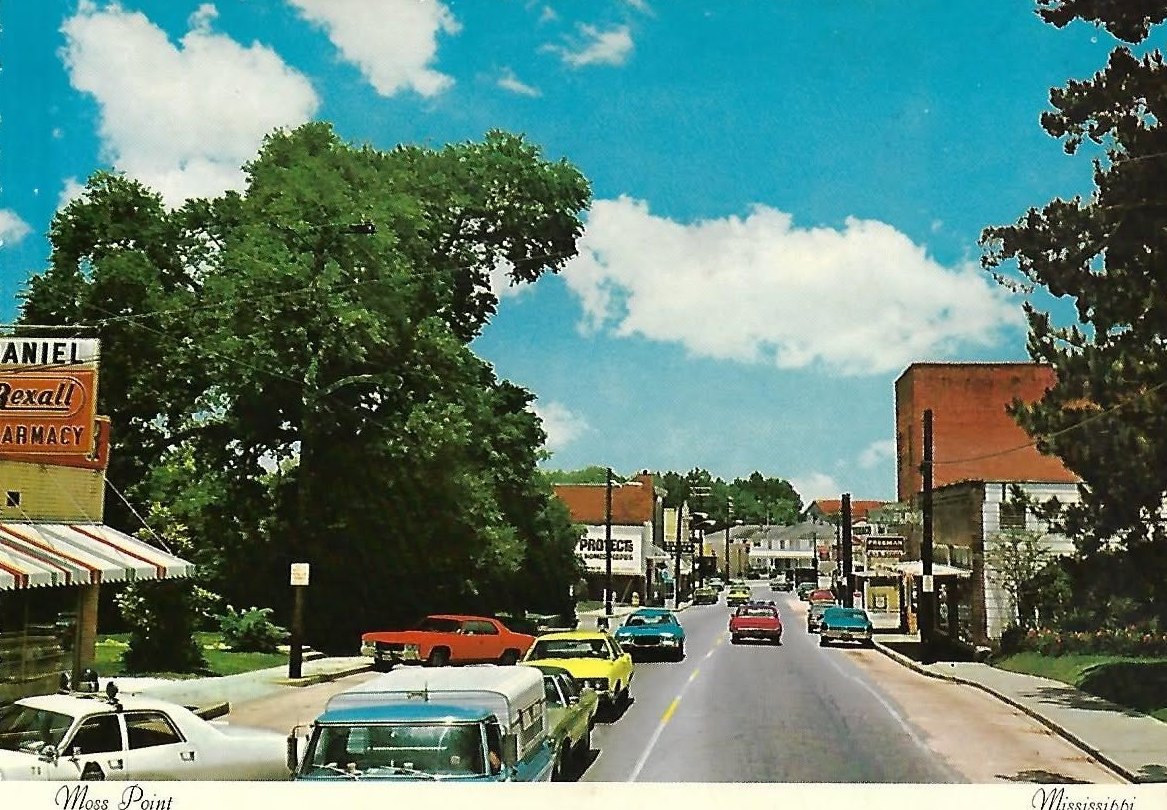
Through all of it, downtown stayed the gathering place. Within living memory, Main Street still pulled the whole town in, cars angled at the curb, the Rexall drug store on the corner, awnings rolled out against the coast sun. It's the Moss Point a lot of people still picture when they think of home.
44. Toni Seawright makes history
In 1987, the whole town was watching one of its own on the biggest stage in America. Toni Seawright grew up in Moss Point, was homecoming queen at Moss Point High, and became the first African American to earn a music degree at Mississippi University for Women. On July eighteenth, 1987, she was crowned Miss Mississippi in Vicksburg, the first African American woman ever to hold the title. Her hometown cheered her all the way to Atlantic City, where she finished fourth runner up at Miss America. She went on to tour in The Wiz, perform on Broadway, and appear on Nickelodeon alongside her own son.
45. Coach Haynes and the Tigers
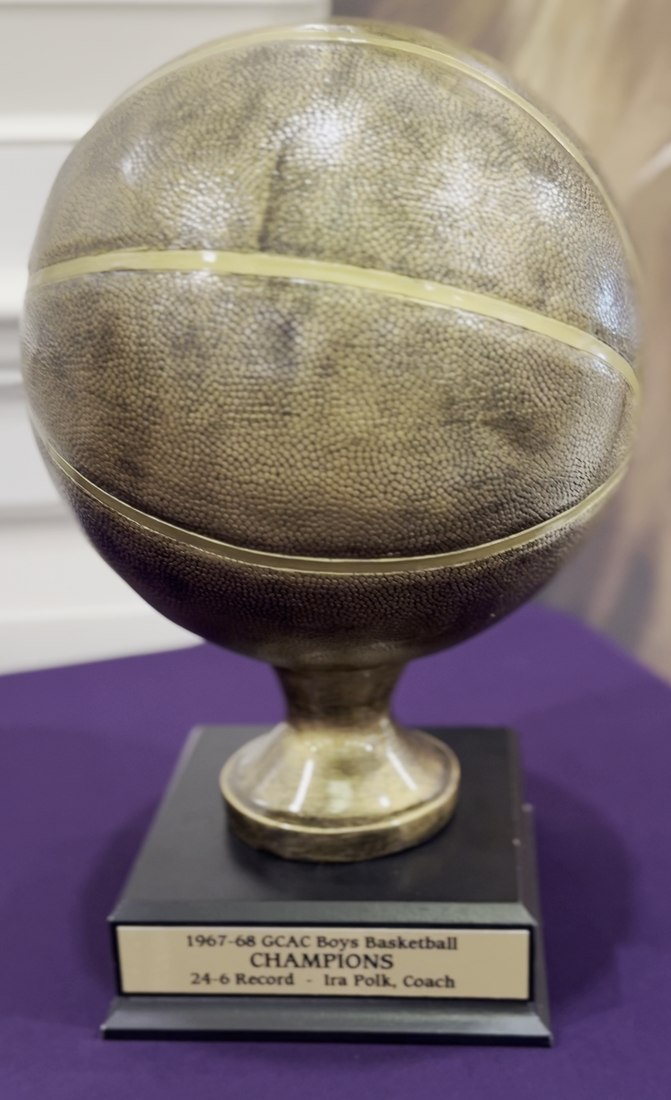
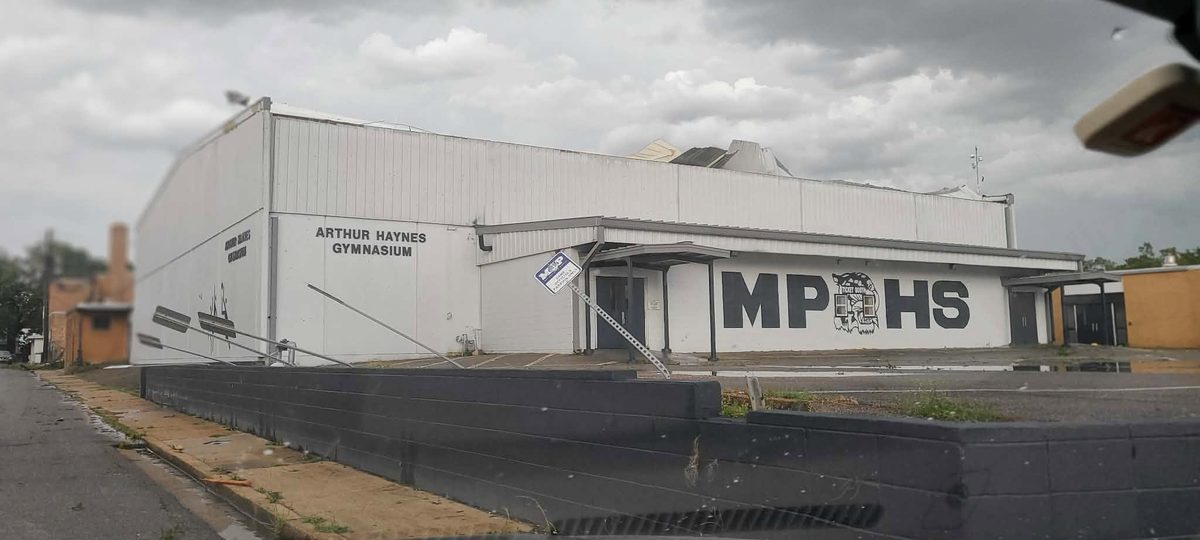
Moss Point’s game was never only played on Friday nights. Twice, Coach Arthur Haynes took the Tiger basketball team all the way to the State Playoffs, and all of Moss Point went with them. Haynes patrolled the Tiger bench for more than thirty years, from 1968 to 1999, and when it came time to name the high school gymnasium, there was only ever one choice. His name is on it still.
46. The South 40
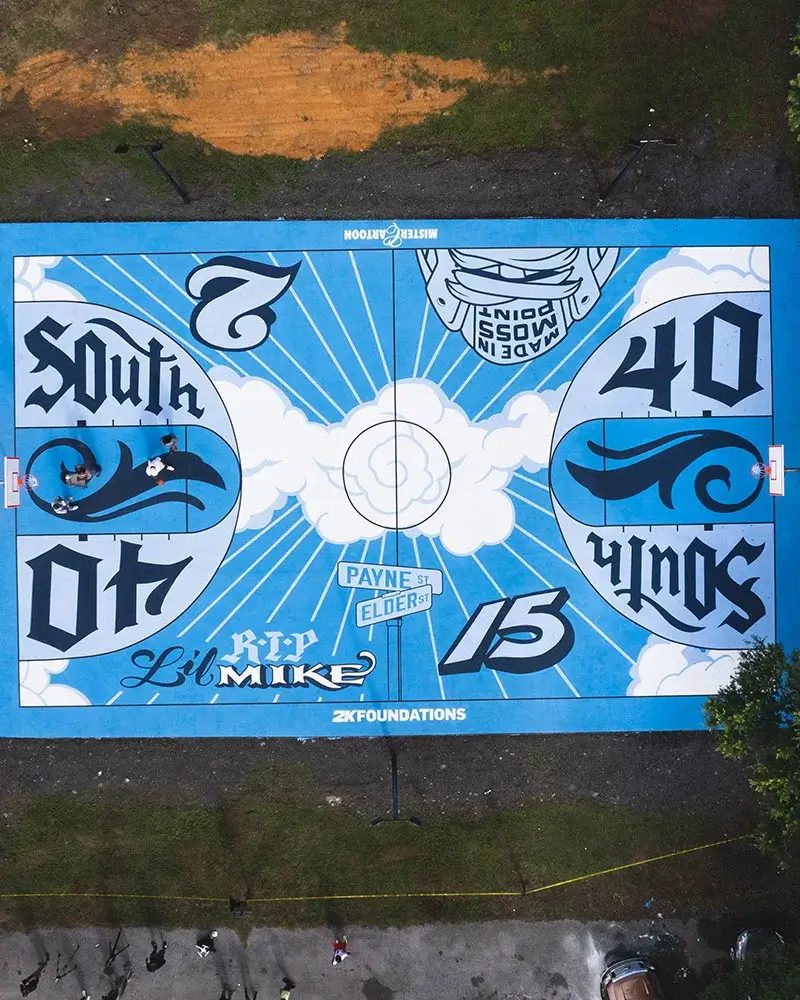
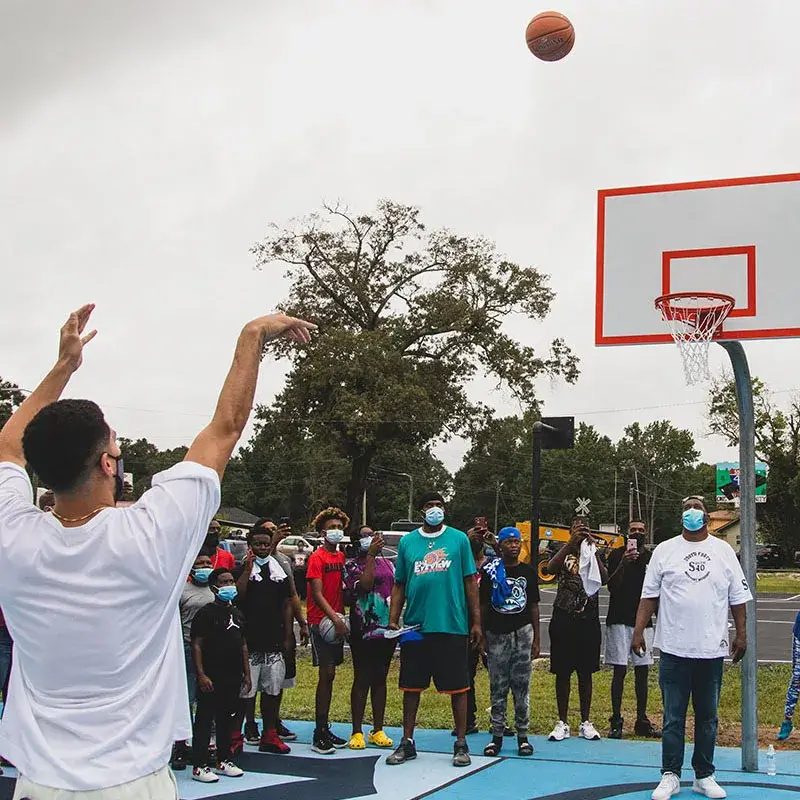
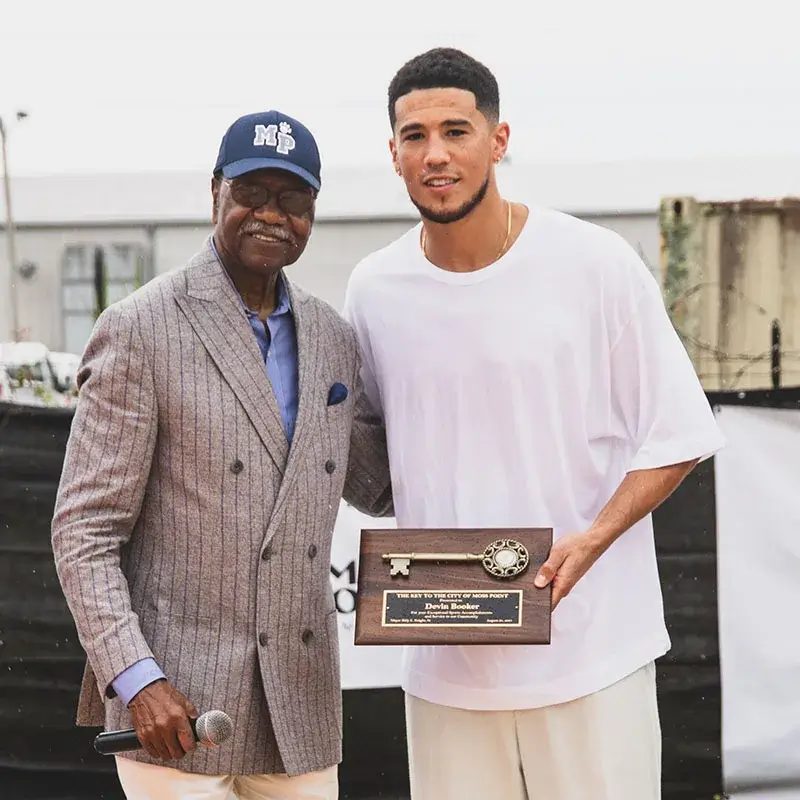
Down on the south side of town, another kind of pride was taking root. Where Elder and Payne streets meet, a stretch of ground that had been a swamp, and then a city dump, became the heart of a neighborhood folks call the South 40, named for the original forty friends who grew up meeting there to play basketball. Those friends made each other a promise, keep the drugs off this corner, and for more than thirty years they have kept it, still gathering at the court every Thursday. One of the men who shaped those boys was Coach Calvin “Choke” Stallworth, the first Black coach to work alongside Coach John Welch in the Moss Point Recreation Department, a man who spent his life coaching basketball and pushing Moss Point kids toward college. At his passing, the players he had raised were still living all through this community, the youngest of them forty years old, the oldest seventy four. In 2021, the city named that ground Calvin “Choke” Stallworth Park in his honor. And that same summer, fresh from an Olympic gold medal, NBA All Star Devin Booker of Moss Point High came home and rebuilt the court, crowned with a mural by the artist Mister Cartoon. The South 40 still looks after it, and its tournaments and toy drives are on the city’s calendar to this day.
47. A Tiger dynasty
The town had a champion's habit by then. Out on the football field, the Tigers turned that old rivalry's grit into a dynasty. It was head coach Billy Miller who started the winning, leading Moss Point to its first state championship in 1983. And when Jerry Alexander took over from him, the winning kept right on going, four more state titles by the year 2000. Alexander's name is on the field at Dantzler Stadium today.
48. Launched at Moss Point
And the shipyards were raising champions of their own. In 1998, the Moss Point yard delivered the Kennicott, a three hundred and eighty two foot ocean going ferry that still carries travelers across the Gulf of Alaska today. The Army’s biggest watercraft, the Besson class logistics ships, came off the ways at the Escatawpa yard. And in 2003, the town watched the Oscar Dyson slide into the river, the first of a new class of NOAA research ships built right here, among the quietest fisheries survey vessels in the world. But by then, the tide was turning. The Walker Yards had gone quiet back in 1985. In 2001, International Paper and the old chemical plant closed in the same year. And in 2016, the last of the big shipyard work moved down the river. Across three decades, more than fourteen hundred jobs went with them. What stayed was a town that knew how to build, and how to build back.
49. The water came
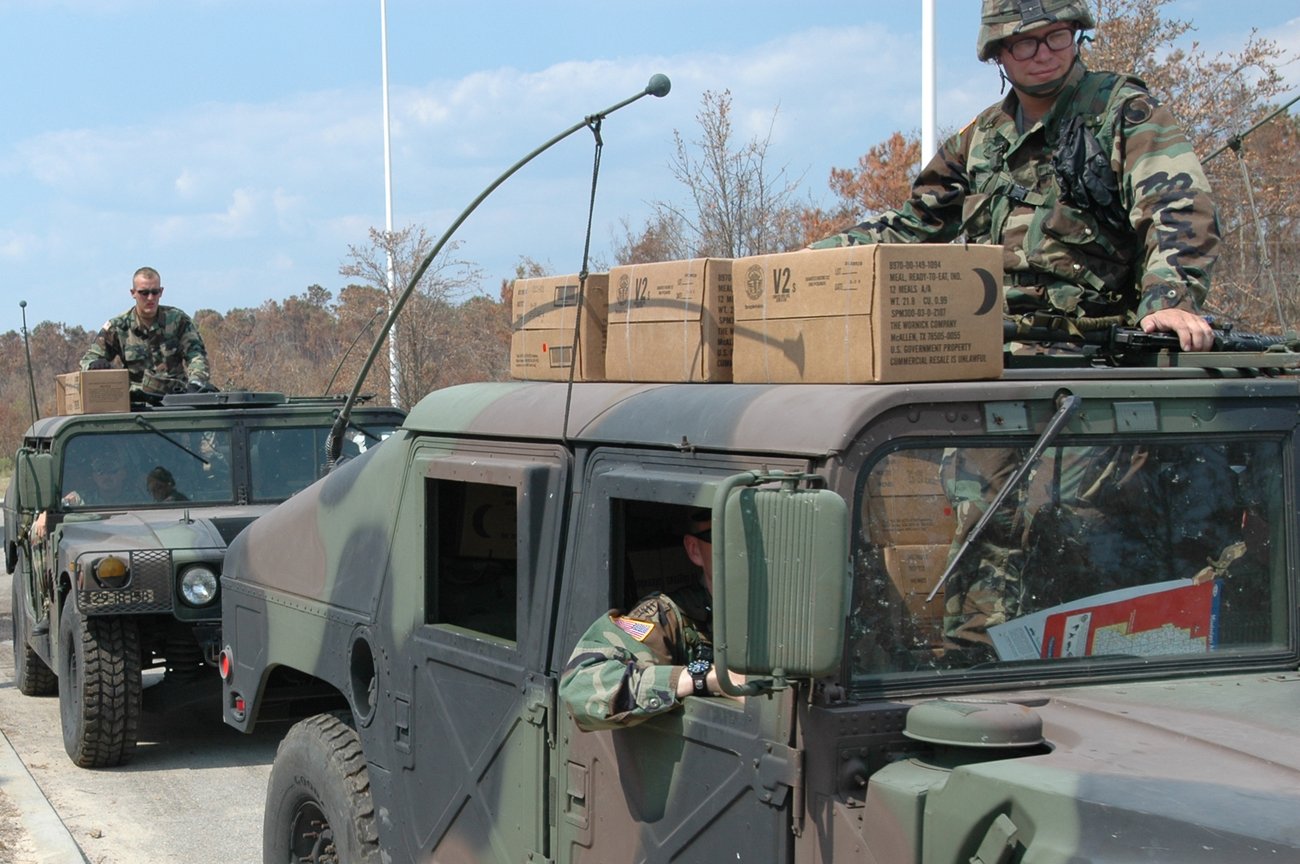
This city has always known that the water gives, and the water takes. On the morning of August twenty ninth, 2005, Hurricane Katrina came ashore at the Louisiana line and put Moss Point in its strongest quadrant. The surge drove the rivers backward into town. Downtown flooded. Water rose into City Hall itself. Nearly half the homes in the city were damaged, and twelve lives were lost across Jackson County. On a coast that had already endured Camille, this was the storm all others would be measured against. But church crews and volunteers arrived almost before the water fell, and they were still coming years later, carrying families back into their homes.
50. The river gets a front door
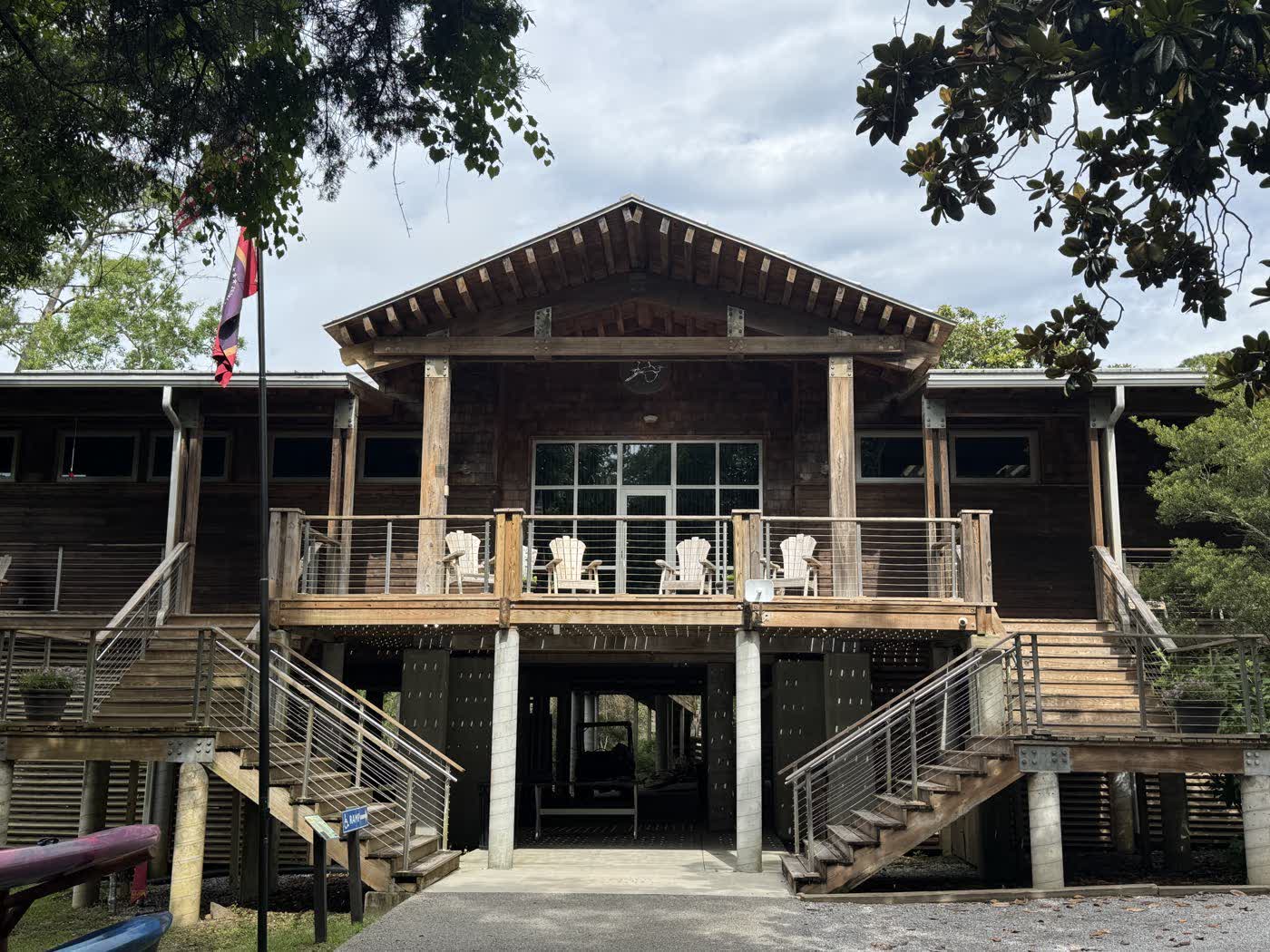
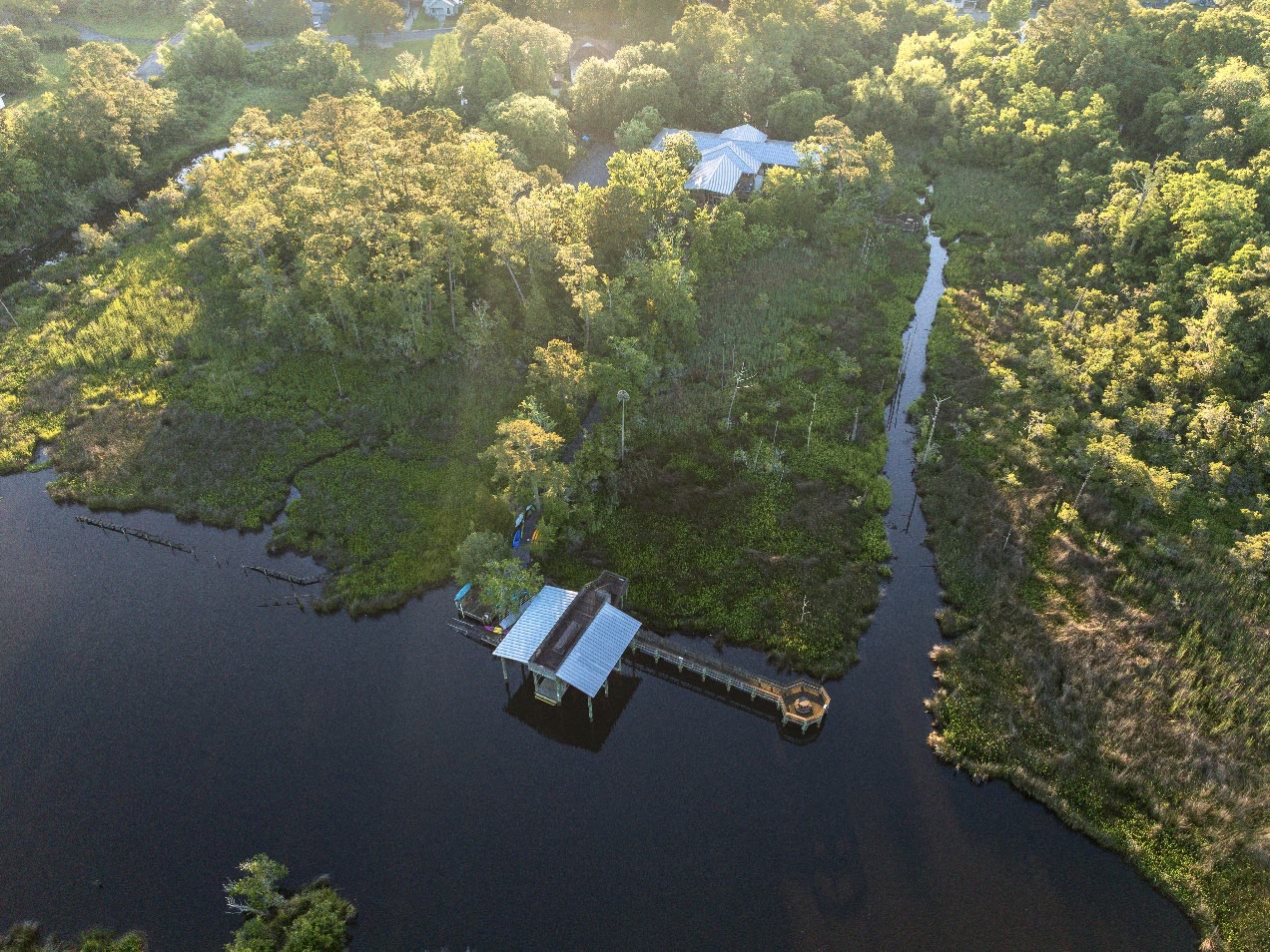
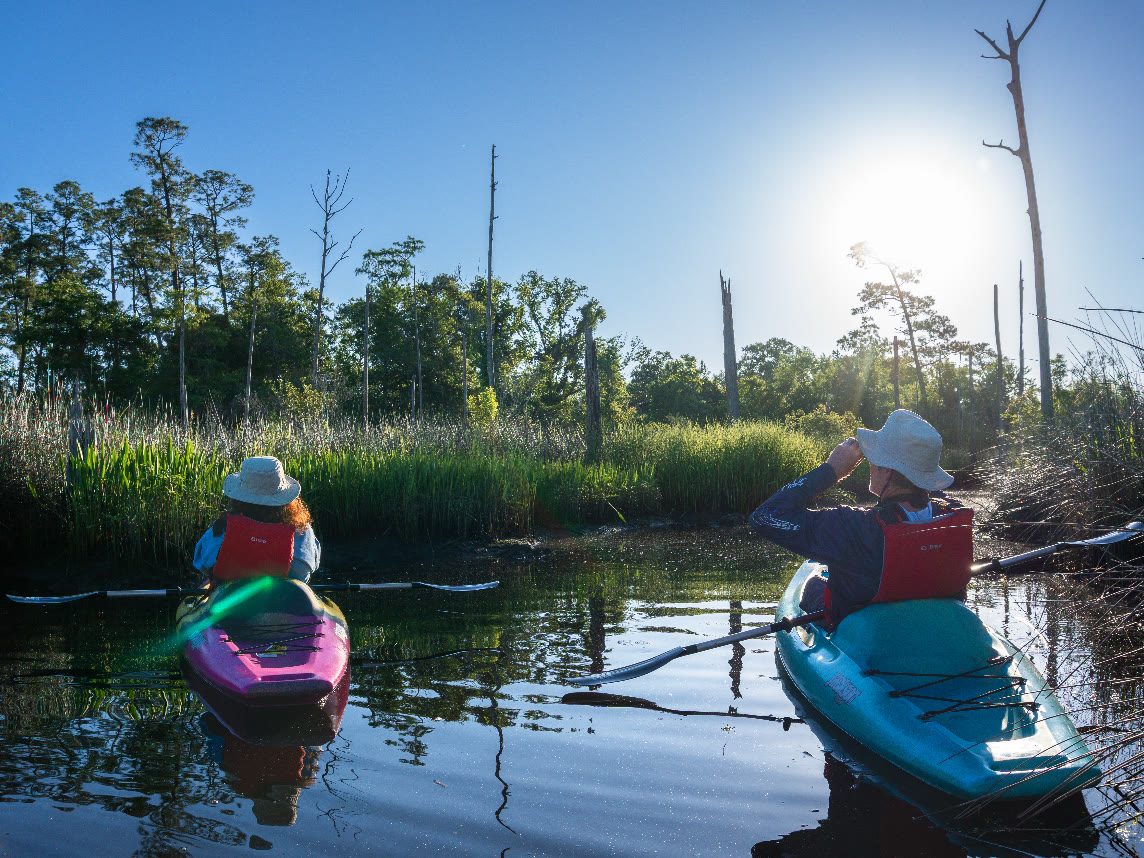
And in those rebuilding years, the river gave the town something back. Ten years after the storm, in the fall of 2015, the Pascagoula River Audubon Center opened its doors on Rhodes Bayou, a cypress and glass building raised on ten wooded acres, with gardens, boardwalks, and a covered dock where you can sit and watch the birds, or slip a kayak into the quiet water. And there is a fitting story in that. The Pascagoula is the largest free flowing river left in the lower forty eight states, saved in the 1970s when more than thirty five thousand acres were set aside for the public. More than two hundred kinds of birds live and breed in these swamps and marshes. So the town that was built by sawing the river's timber now keeps the front porch to its wild side, and children paddle out from the same banks that once floated longleaf pine.
51. It always rebuilds
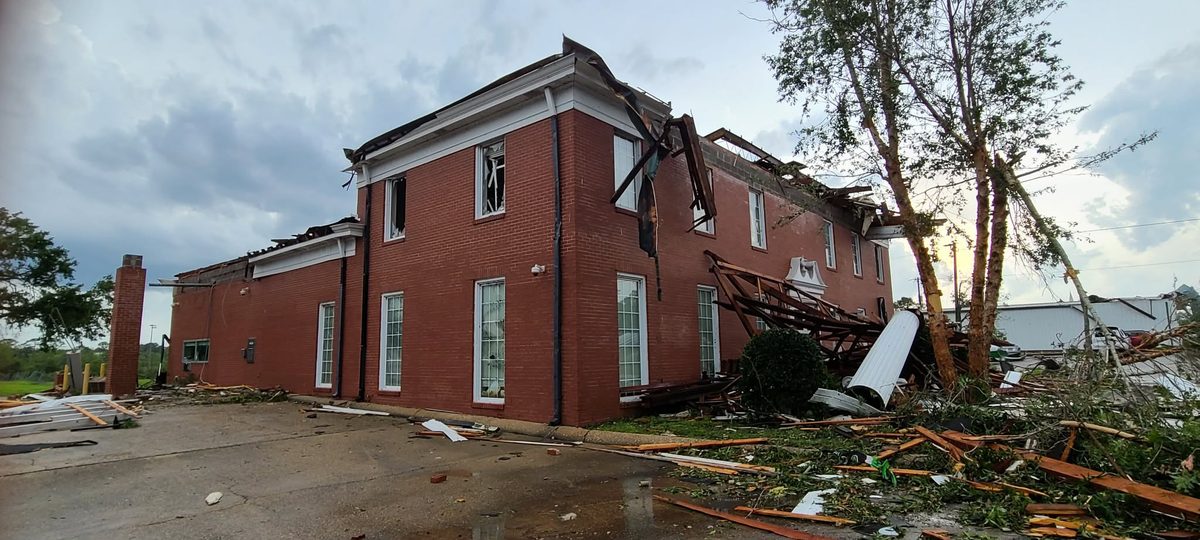
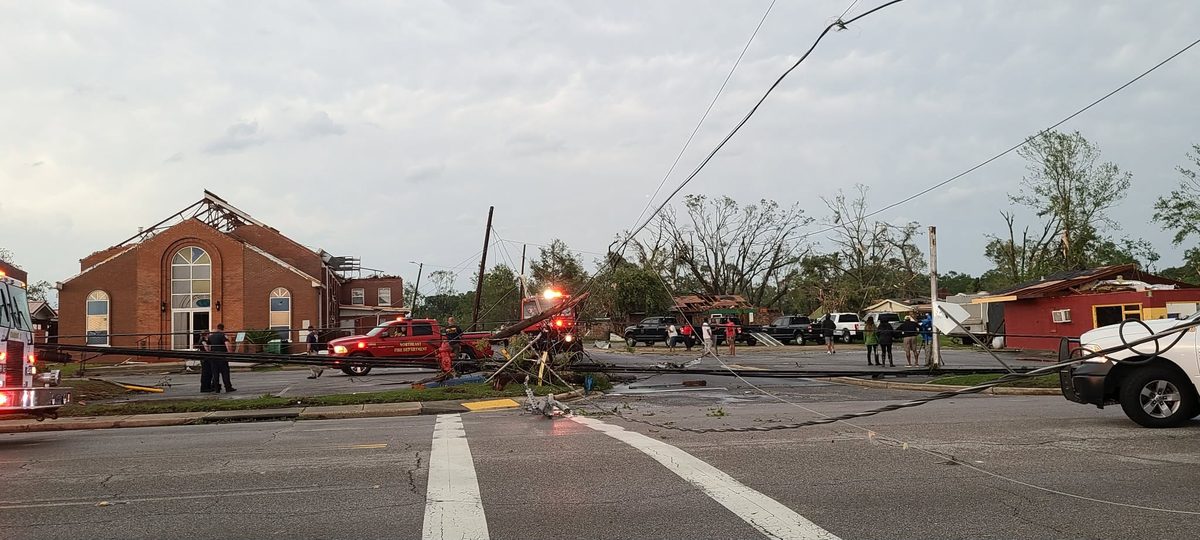
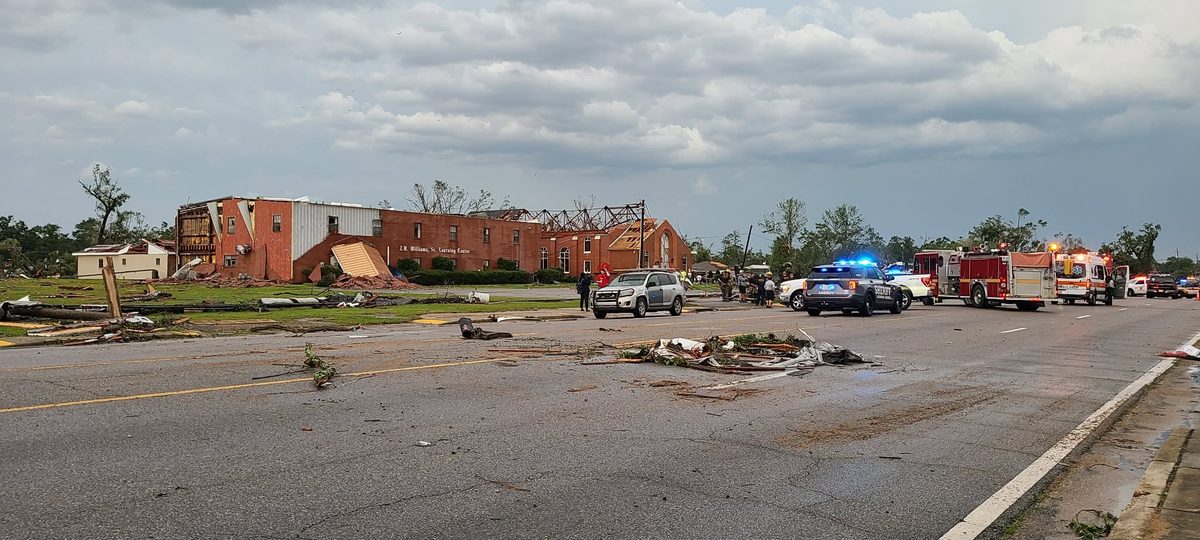
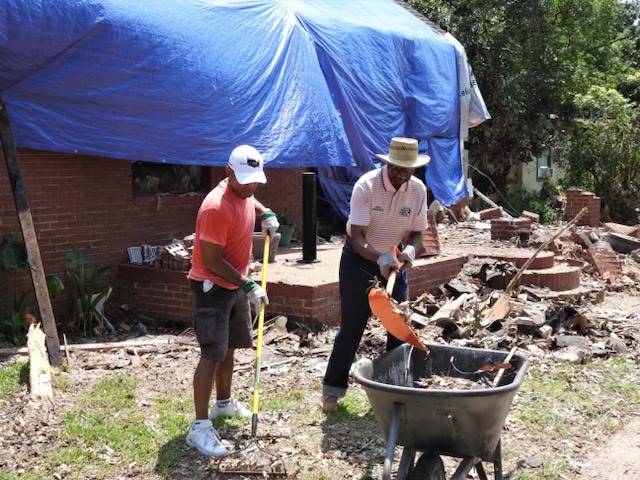
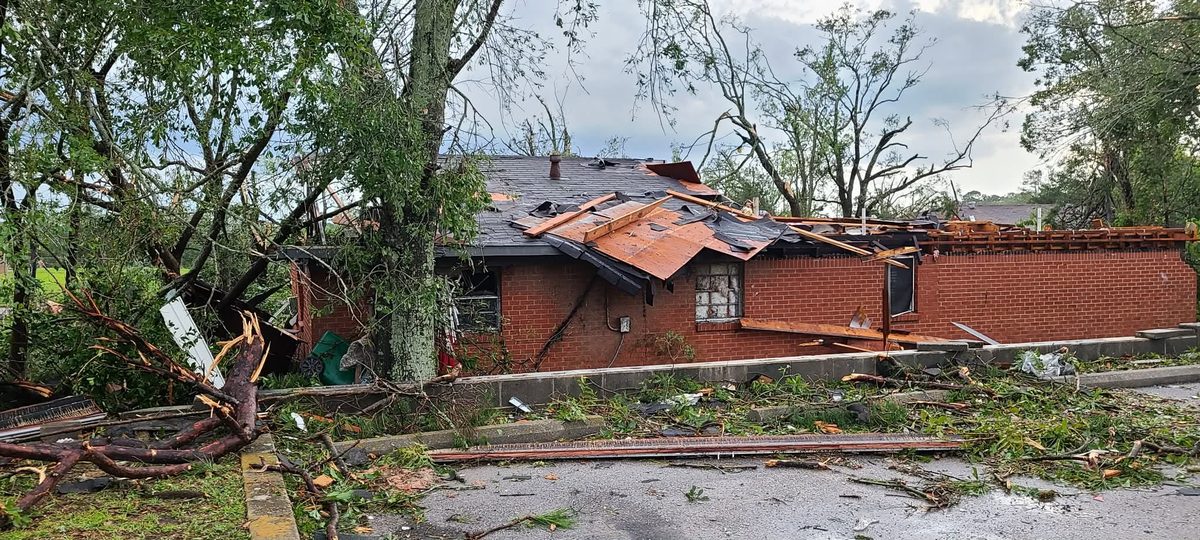
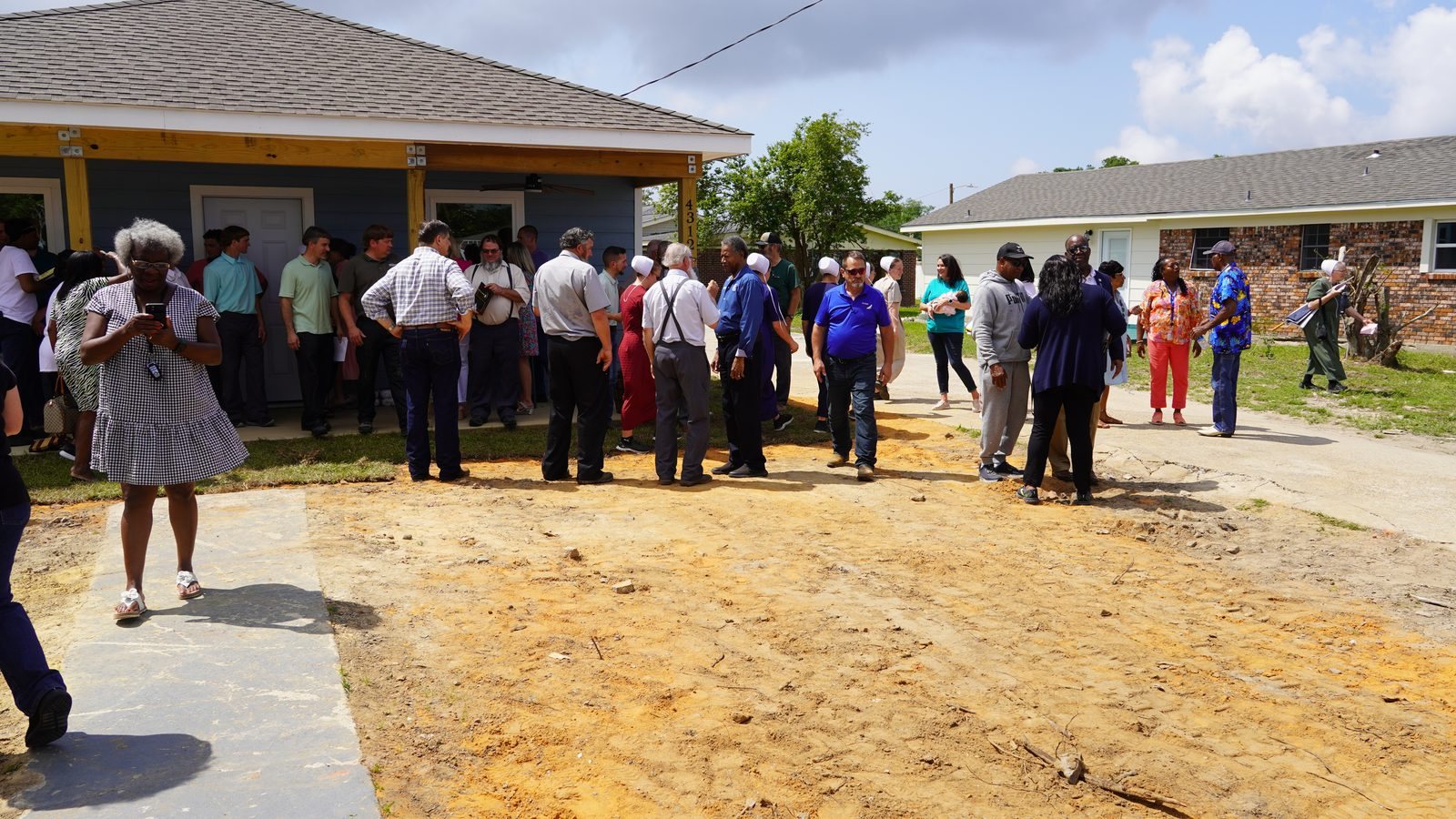
Eighteen years later, the test came from the sky instead of the sea. On the afternoon of June nineteenth, 2023, an EF 2 tornado dropped out of a summer storm and cut more than two miles through the heart of town with winds near a hundred and thirty miles an hour. It stripped the roofs from the bank and the church on Main Street, and lifted the gym roof off the high school while students sheltered inside. More than three hundred homes and businesses were damaged, and not one life was lost. Then the town filled up with helpers, more than fourteen hundred volunteers in the first year alone, among them Amish crews who stayed four months, raising new homes where the storm had passed. Moss Point rebuilds. It always has.
52. Opened, and sealed again
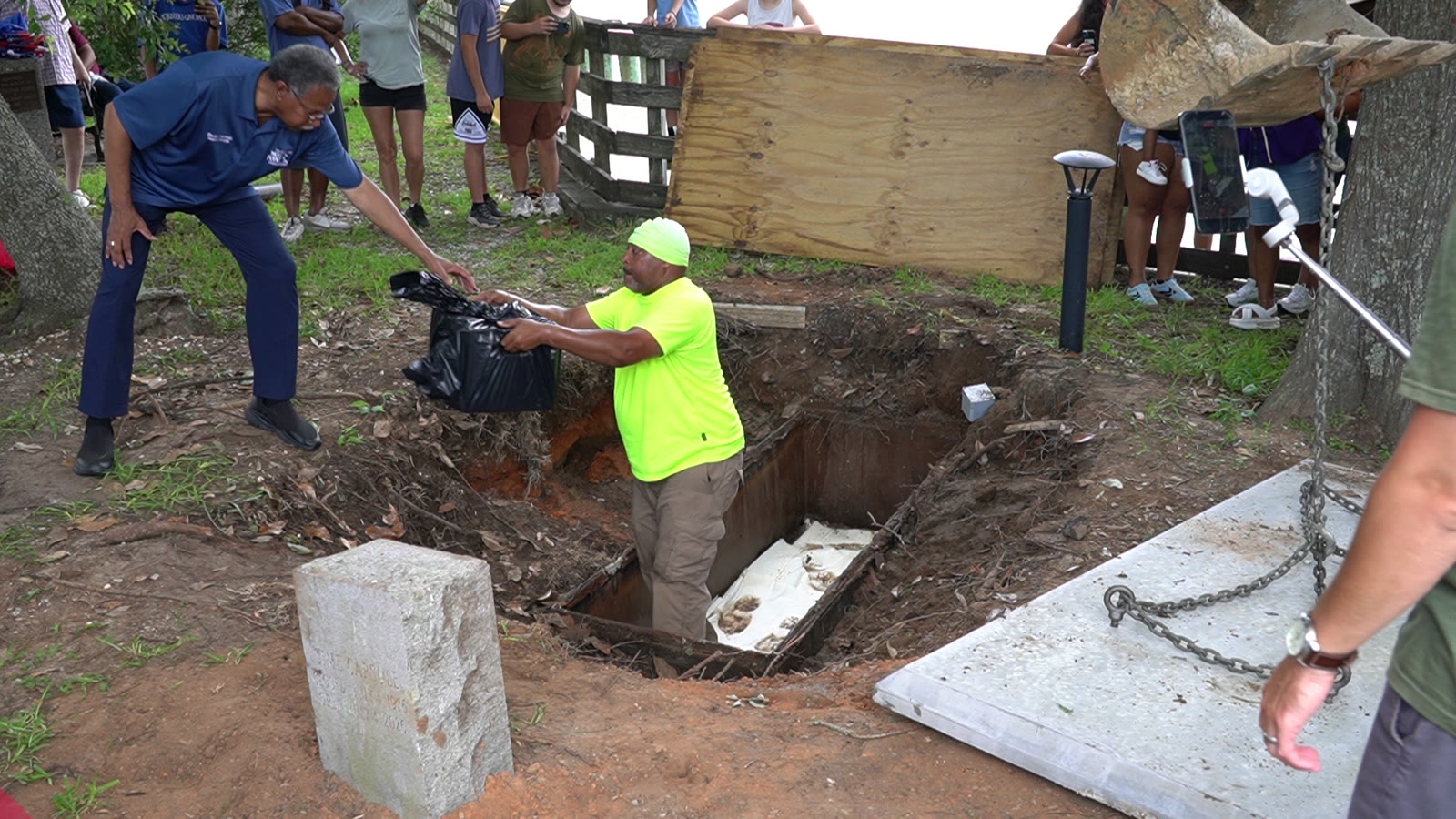
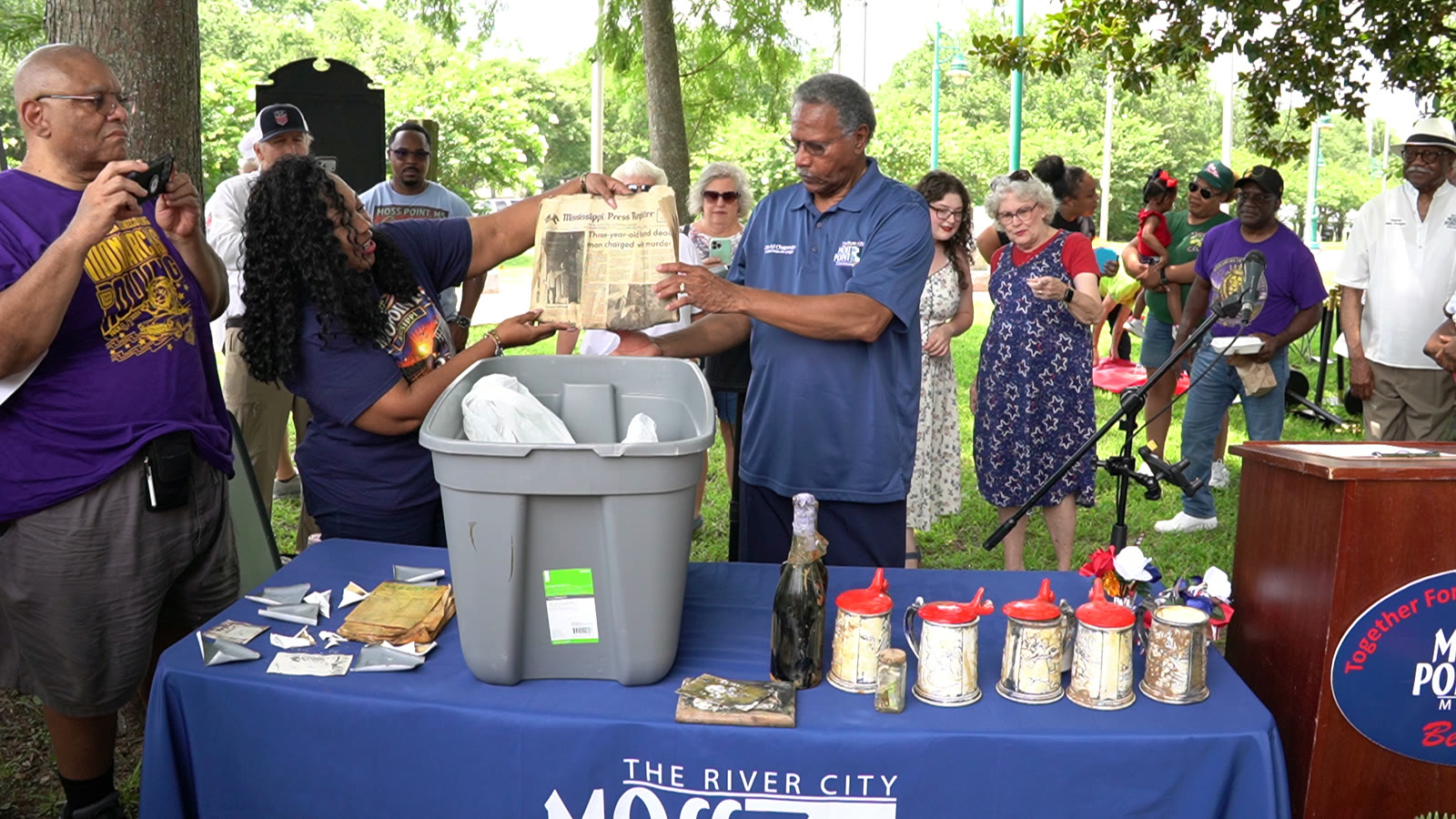
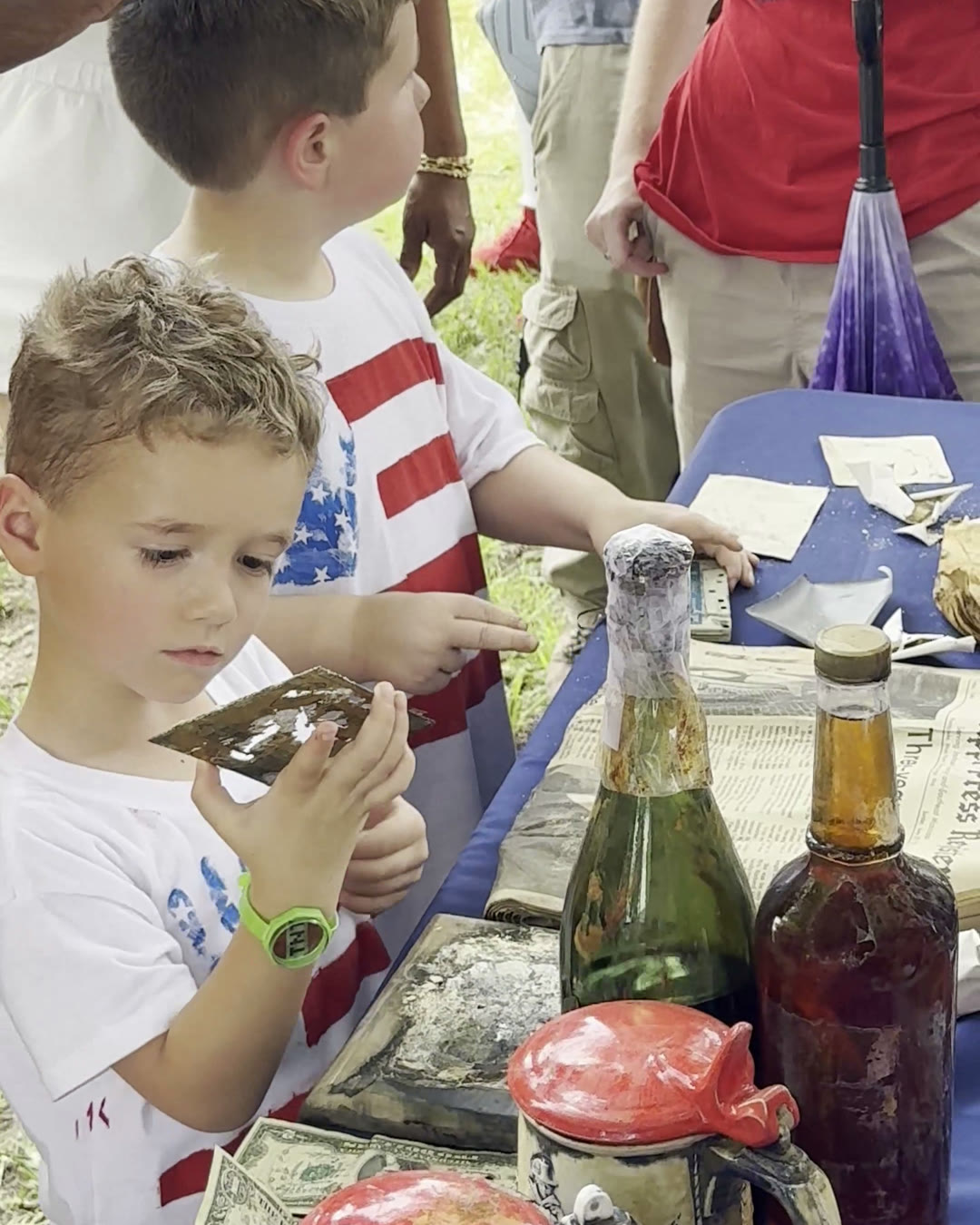
On the Fourth of July, 2026, in the city's hundred and twenty fifth year, Moss Point gathered on the downtown riverfront to open a piece of its own past. Fifty years earlier, during the nation's bicentennial in 1976, the community had sealed a time capsule and buried it here beside the Escatawpa. The city lifted it out and opened it in front of the crowd, laying the keepsakes on the table, bicentennial steins with bright red lids, old coins and a dollar bill, and a yellowed front page from the Mississippi Press Register. Then, in the same ground, the city buried a new capsule, sealed to be opened in 2076. And the children who pressed in for a closer look are the ones most likely to see it come back up.
53. Still a working river city
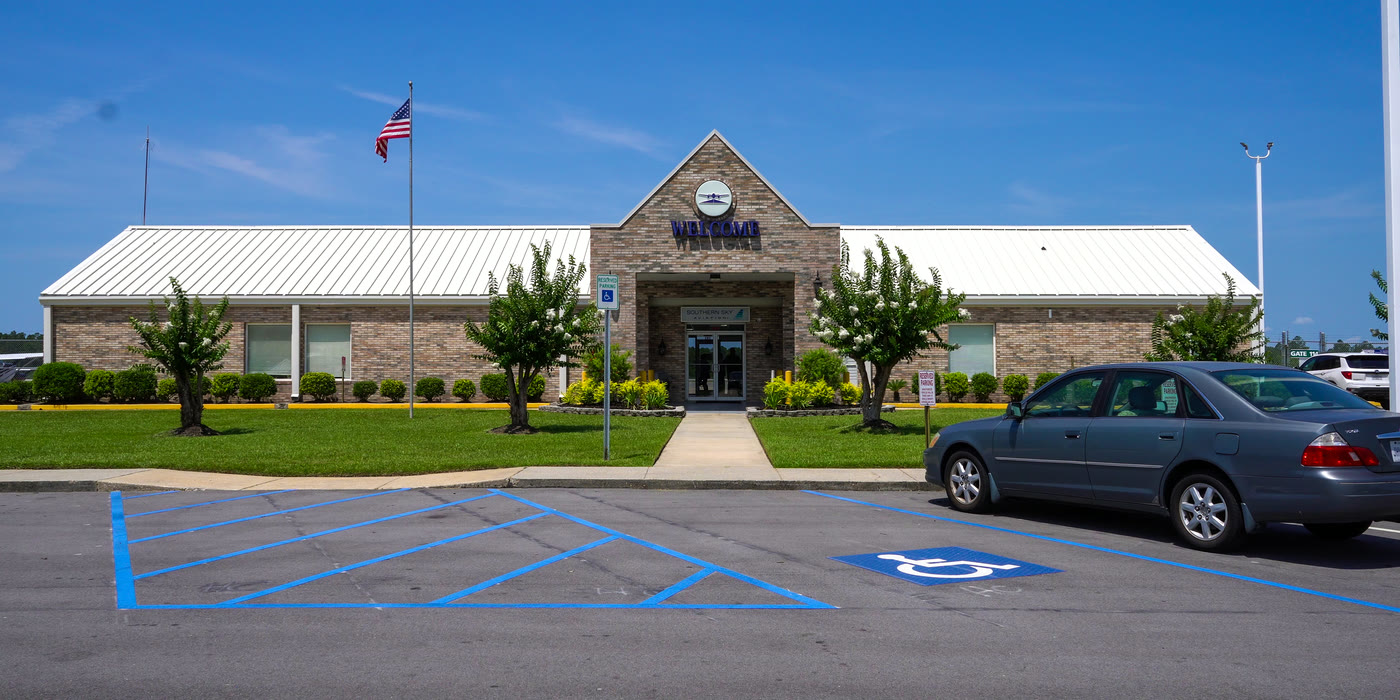
Moss Point has always been a working town, and it still is. On the Escatawpa, the menhaden boats still run, one of the city's oldest industries and the longest still going. The Mississippi Export Railroad, headquartered in Moss Point for more than a century, still hauls freight along the line it laid. And next to Trent Lott International Airport, Northrop Grumman builds advanced aerospace and unmanned systems, a whole new industry grown up on the edge of town.
54. The city you can visit now
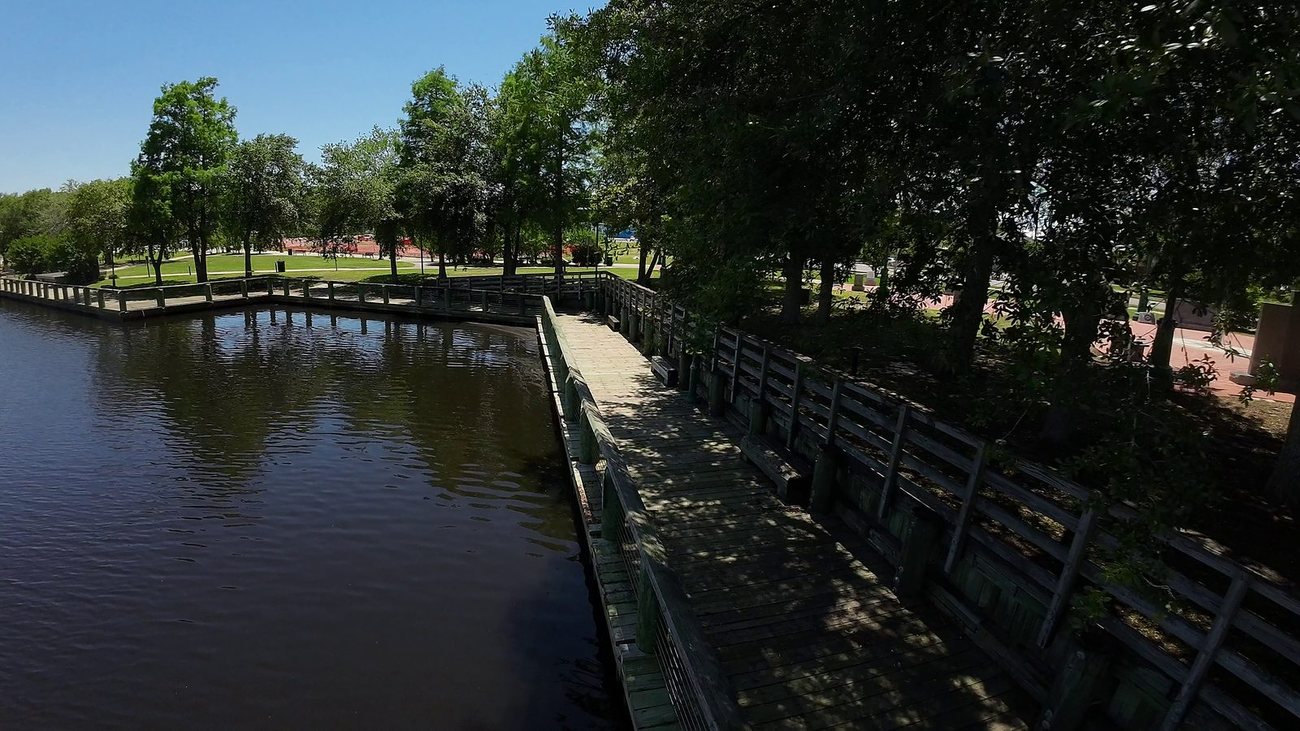
Moss Point isn't only a place to do business, it's a place to spend a day. Downtown is small and walkable, the kind of Main Street where you park once and stroll past the local shops and the old drugstore, with a shaded plaza, string lights, and a boardwalk reaching right out over the Escatawpa. There's a park for nearly every neighborhood now, with walking trails and ball courts. And the best way to see the city is still from the water, out on the marsh and the slow bends of the Singing River. Down at the Audubon Center on Rhodes Bayou, you can rent a kayak, or just sit on the covered dock and watch the birds. The calendar stays full too, with the River Jamboree every May, classic cars cruising the riverfront each fall, and a lighted boat parade every Christmas.
55. Building what comes next
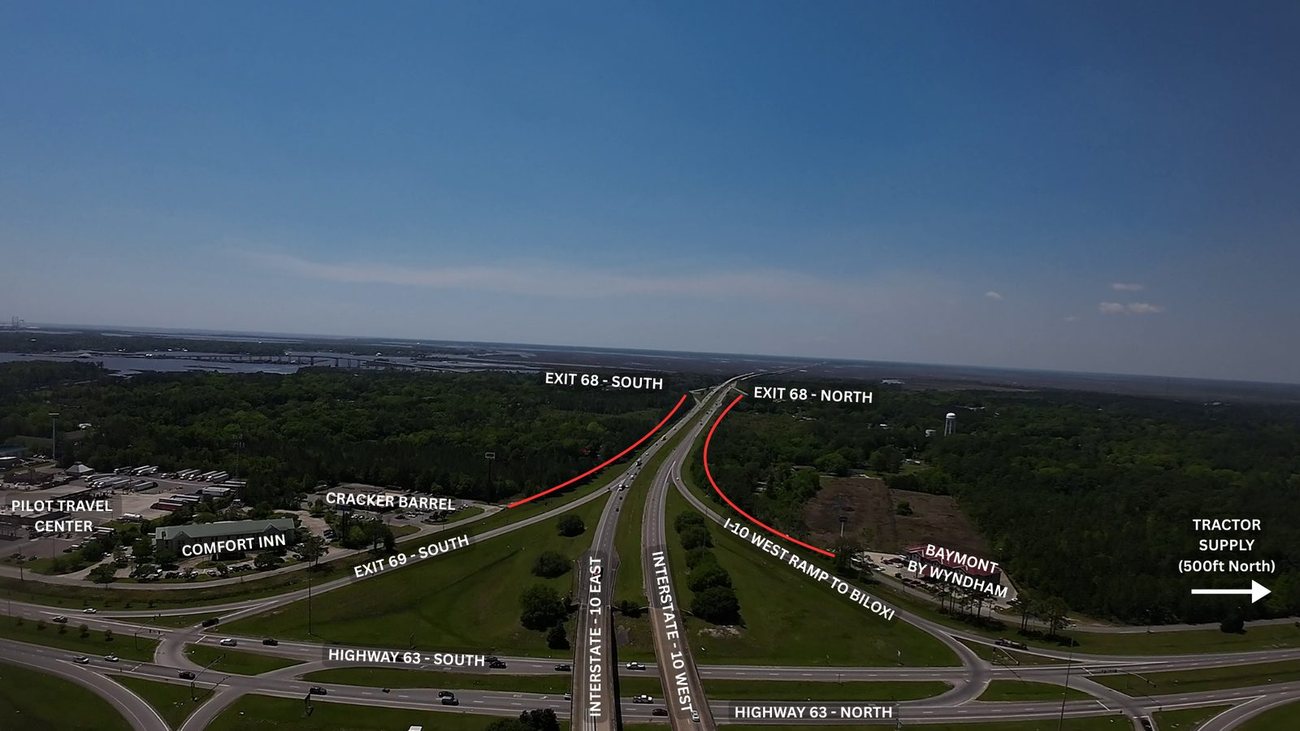
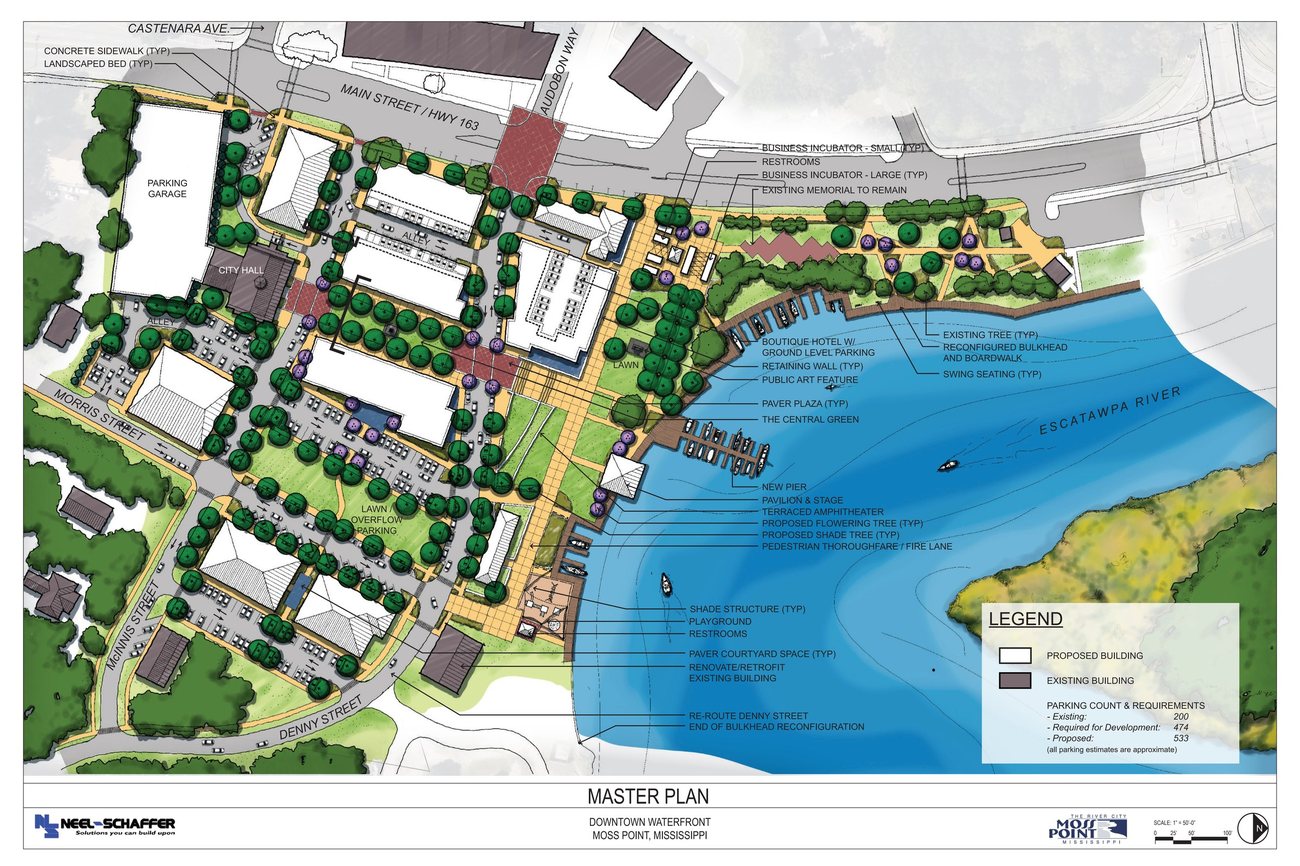
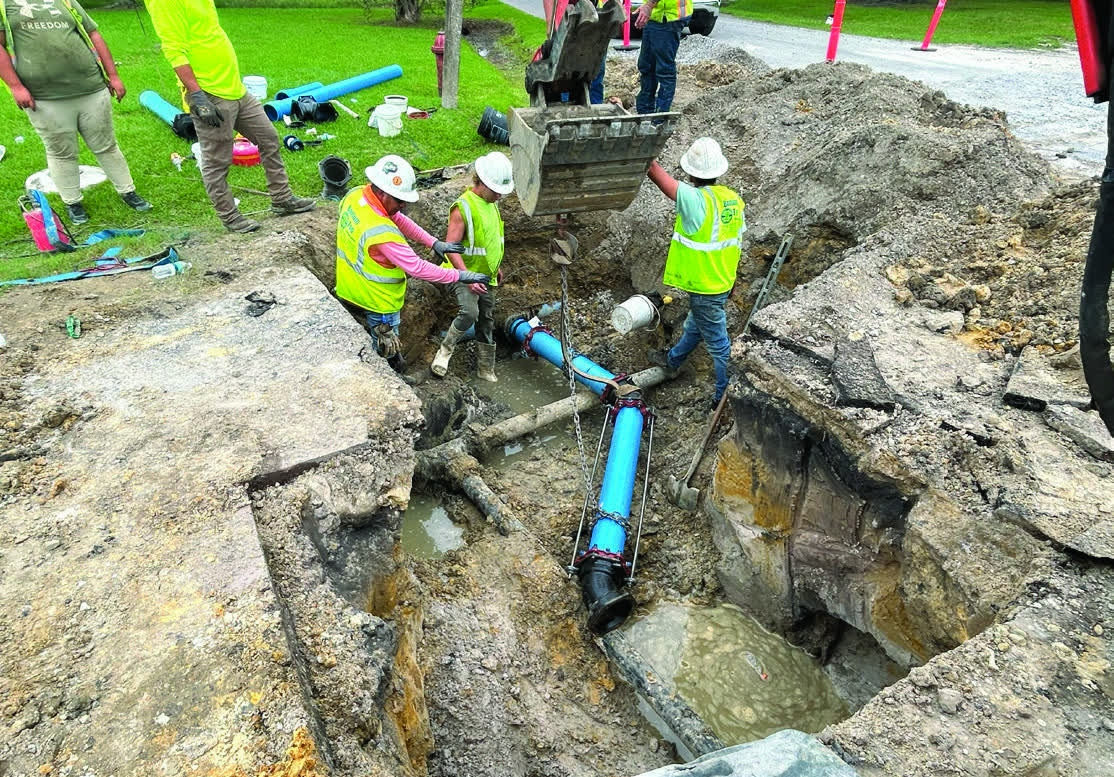
Which brings us to what comes next. Moss Point isn't only proud of where it's been, it's busy building where it's going. Mayor Billy Knight Senior was elected in 2021, and in 2025 the people of Moss Point returned him to office with ninety three percent of the vote, the first mayor in decades to win a second term. He started with the foundations. More than four thousand seven hundred new water meters went into the ground across the city, so Moss Point no longer has to estimate anyone's bill, and the city no longer has to subsidize the water bills of its citizens. Neighborhood drainage systems, neglected for decades, have been dug out and made new. And the building hasn't stopped. Down on the water, there are plans for a new riverfront district. Along Interstate 10, a fresh mile of commercial frontage is set to break ground. New dealerships and a travel center are rising on Highway 63, and the old paper mill site, quiet since 2001, is being cleared for the next big employer, with new housing to go with it. For a town that has rebuilt itself again and again, the next chapter is one it finally gets to plan, not just survive.
56. Proud of its past, building its future
That's the story of Moss Point, named for its moss, shaped by its rivers, and rebuilt, more than once, by its own people. Thank you for following the timeline all the way down to today. Come see the rest of it in person. And if there's one thing I hope you carry with you, it's the word we live by here in Moss Point. Believe. We believe in this city, we believe in its people, and we believe in the future we are building together. So come be part of what comes next, and believe in Moss Point.